

What to Eat in Iran: Regional Dishes and Local Specialties
 What to Eat in Iran: Regional Dishes and Local Specialties
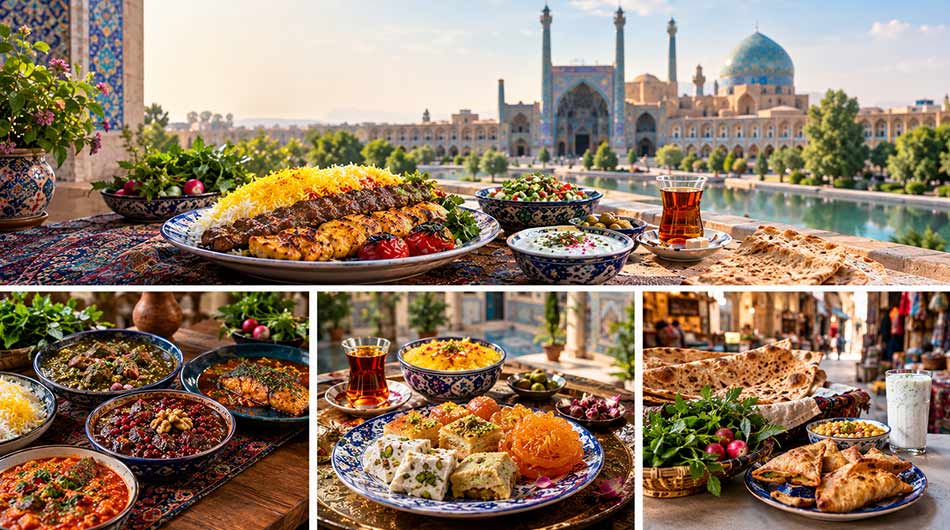 What to Eat in Iran: Regional Dishes and Local Specialties
Iranian cuisine is one of the most rewarding parts of exploring the country. Shaped by centuries of trade, agriculture, migration, and regional traditions, Persian food combines aromatic herbs, saffron, rice, fresh vegetables, fruits, nuts, and carefully balanced spices.
From fragrant rice dishes and slow-cooked stews to grilled kebabs, northern specialties, southern seafood, and delicate Persian sweets, every region offers something different.
If you are planning a trip and wondering what to eat in Iran, this guide introduces the country’s best-known traditional dishes, regional specialties, desserts, drinks, and practical tips for ordering food as a visitor.
Important travel note: Before planning a trip, check your government’s latest travel advisory and confirm that travel to your intended destinations is safe and permitted.
Quick Facts About Iranian Food
- Main ingredients: Rice, bread, herbs, vegetables, legumes, meat, yogurt, dried fruits, and nuts.
- Popular dishes: Chelo kebab, ghormeh sabzi, fesenjan, tahdig, and dizi.
- Regional highlights: Herb-rich dishes in northern Iran, seafood in the south, and distinctive traditional dishes in central and northwestern regions.
- Vegetarian options: Available, but some dishes contain meat stock or animal-based ingredients even when they appear vegetable-based.
- Typical drinks: Black tea, doogh, and seasonal fruit drinks.
- Dining style: Meals may include shared dishes, rice served with stews, fresh herbs, yogurt, and pickles.
1. Famous Iranian Dishes You Should Try
Some dishes are widely enjoyed throughout Iran. They are excellent starting points for visitors who want to experience traditional Persian cooking.
Chelo Kebab: Iran’s Famous Rice and Kebab
Chelo kebab is among the best-known dishes in Iranian cuisine. It typically consists of steamed rice served with grilled meat, often accompanied by grilled tomatoes, butter, and sumac.
Popular varieties include:
- Kebab Koobideh: Grilled minced meat shaped around flat skewers.
- Kebab Barg: Thinly cut and marinated pieces of meat, usually lamb or beef.
- Joojeh Kebab: Marinated grilled chicken, often flavored with saffron and lemon.
- Chelo Kebab Soltani: A combination of two kebab styles, commonly koobideh and barg.
Chelo kebab is usually served with rice, although bread may accompany certain versions. If you want to try one classic Persian restaurant meal, this is a strong choice.
Ghormeh Sabzi: A Classic Persian Herb Stew
Ghormeh sabzi is a beloved Iranian stew made with a mixture of herbs, beans, dried lime, and usually beef or lamb. Its distinctive flavor comes from slowly cooking the ingredients together.
The herbs often include parsley, coriander, chives or green onions, and fenugreek. The finished stew is typically served with steamed rice.
The combination of fragrant herbs and tangy dried lime gives ghormeh sabzi a flavor that is difficult to confuse with other dishes.
Vegetarian tip: Traditional ghormeh sabzi usually contains meat. Ask whether a meat-free version is available rather than assuming the dish is vegetarian.
Fesenjan: A Rich Walnut and Pomegranate Stew
Fesenjan, also known as fesenjoon, combines ground walnuts and pomegranate paste to create a thick sauce with a complex sweet-and-sour flavor. It is commonly prepared with chicken, although recipes vary.
The sauce can be dark, rich, and slightly tangy. It is often served with rice and is especially appealing to visitors interested in dishes that balance fruit, nuts, and savory ingredients.
Dizi: A Traditional Slow-Cooked Meal
Dizi, sometimes called abgoosht, is a traditional dish made with meat, chickpeas or other legumes, potatoes, tomatoes, and spices.
In traditional serving styles, the broth is poured into a bowl and eaten separately, while the remaining ingredients are mashed together. Bread, fresh herbs, pickles, and onions may accompany the meal.
Dizi is filling and offers a glimpse into a more traditional style of Iranian dining.
Tahdig: The Crispy Rice Everyone Wants
Tahdig is the golden, crispy layer that forms at the bottom of a pot of rice. Depending on the preparation, it may be made with rice, bread, or potato slices.
Its crunchy texture contrasts with the soft, fluffy rice above it. In many households and restaurants, tahdig is a favorite part of the meal.
It is usually served alongside rice dishes rather than as a complete meal on its own.
2. Regional Iranian Food: What to Eat in Each Part of Iran
 2. Regional Iranian Food: What to Eat in Each Part of Iran
Iran’s climate and geography vary considerably, and its cuisine reflects those differences. Coastal communities, forested northern regions, agricultural plains, and historic trading cities all have distinctive food traditions.
Northern Iran: Herbs, Rice, Olives, and Fish
The northern provinces, especially Gilan and Mazandaran, are known for abundant herbs, rice cultivation, and dishes influenced by the Caspian Sea and surrounding forests.
Regional specialties include:
- Mirza Ghasemi: A smoky eggplant dish traditionally made with tomatoes, garlic, and eggs.
- Baghala Ghatogh: A northern stew made with broad beans, dill, garlic, and eggs.
- Torsh Tareh: A tangy herb-based dish whose ingredients vary by recipe.
- Zeytoon Parvardeh: Olives mixed with ingredients such as walnuts, pomegranate molasses, garlic, and herbs.
- Caspian fish dishes: Fish prepared in different local styles, sometimes grilled or served with rice.
Northern food often features sour flavors, fresh herbs, garlic, and seasonal ingredients.
Vegetarian-friendly choices: Mirza ghasemi, baghala ghatogh, and some versions of torsh tareh may be suitable, but recipes vary. Ask about eggs, meat stock, and other animal-derived ingredients.
Isfahan: Beryani and Traditional Sweets
Isfahan is known for historic architecture as well as distinctive local food.
Beryani, sometimes spelled biryani in English-language menus, is a traditional Isfahani dish generally prepared with minced or finely chopped lamb or mutton and served with bread. It is different from the South Asian rice dish commonly called biryani.
Other local specialties include traditional sweets such as gaz, a nougat-like confection often made with sugar, egg whites, nuts, and flavorings.
Visitors exploring Isfahan can look for traditional restaurants and confectionery shops to experience these regional specialties.
Shiraz and Fars: Fragrant Rice and Local Flavors
Shiraz and the surrounding Fars region offer a range of rice dishes, stews, and local preparations.
One well-known specialty is Shirazi salad, a refreshing combination of finely diced cucumber, tomato, and onion, often seasoned with lemon juice or verjuice and herbs.
Other dishes associated with the region include Kalam Polo Shirazi, a rice dish prepared with cabbage, herbs, and small meatballs in many traditional recipes.
Shiraz is also a good place to explore Persian sweets, seasonal fruit, and traditional drinks.
Yazd: Sweets and Desert-Region Traditions
Yazd is famous for its confectionery and traditional sweets. Its dry climate and long trading history have helped shape a distinctive food culture.
Look for:
- Qottab: A pastry filled with a mixture commonly containing almonds or other nuts.
- Baklava: A layered sweet whose local versions may differ from those found elsewhere.
- Pashmak: A delicate, floss-like confection similar in appearance to cotton candy.
- Traditional Persian sweets: Often flavored with cardamom, rosewater, nuts, or saffron.
Yazd’s sweets are popular gifts, but ingredients can vary. Ask about nuts, dairy, eggs, and other allergens when necessary.
Tabriz and Northwestern Iran: Koofteh Tabrizi
Tabriz, in northwestern Iran, is particularly associated with Koofteh Tabrizi, a large traditional meatball prepared with ingredients that may include rice, split peas, herbs, and a filling.
Recipes differ between households and restaurants, but the dish is known for its size and substantial preparation.
Northwestern Iranian cuisine also includes hearty soups, grilled meats, breads, and regional dairy products.
Southern Iran: Seafood and Bold Flavors
Southern coastal regions, including areas around the Persian Gulf, are known for seafood and distinctive spice combinations.
Popular dishes include:
- Ghalieh Mahi: A tangy fish stew commonly prepared with herbs, tamarind, garlic, and spices.
- Havari: A regional rice dish that may be prepared with fish or shrimp, depending on the local recipe.
- Grilled fish and shrimp: Served in a variety of coastal styles.
- Southern spiced rice dishes: Often featuring aromatic spices and seafood or meat.
Southern food can have more pronounced spice, garlic, or sour notes than some dishes found elsewhere in Iran. The heat level varies, so ask about chili if you prefer milder food.
Kashan and Central Iran: Traditional Home Cooking
Kashan is known for historic houses, traditional hospitality, and regional cooking. Local menus may include dishes such as Gheimeh Rizeh, a regional preparation involving small meatballs, with recipes varying between establishments.
Visitors can also explore dishes shared across central Iran, including stews, rice meals, flatbreads, and sweets flavored with rosewater or other local ingredients.
When visiting traditional houses or guesthouses, ask whether a home-cooked meal can be arranged in advance.
3. Iranian Street Food and Casual Snacks
Street food and casual snacks offer another way to experience everyday food culture. Availability varies by city, season, and neighborhood.
Ash Reshteh
Ash reshteh is a thick noodle and legume soup made with herbs, beans, and reshteh noodles. It is often topped with fried onions, mint oil, and kashk, a fermented dairy product.
It can be a satisfying meal on its own. If you follow a vegetarian or vegan diet, check the broth and toppings carefully: recipes may contain meat stock or dairy.
Falafel
Falafel is particularly popular in parts of southern Iran and is also available in other cities. It is generally made from ground legumes, herbs, and spices, then fried and served in bread with sauces and vegetables.
Ask about the ingredients and frying oil if you have dietary restrictions.
Samosas and Fried Snacks
Samosa-style snacks and other fried pastries are sold in some casual eateries and street-food settings. Fillings may include potatoes, vegetables, meat, or a mixture of ingredients.
They are convenient for a quick bite, but the exact filling and preparation depend on the vendor.
Fresh Bread
Bread is central to everyday Iranian meals. Depending on the location, you may encounter varieties such as sangak, barbari, lavash, and taftoon.
Freshly baked bread is often enjoyed with cheese, herbs, walnuts, vegetables, or a full meal. A local bakery can be a simple and memorable stop during a city walk.
4. Persian Desserts and Sweets
 4. Persian Desserts and Sweets
Iranian sweets often feature nuts, saffron, rosewater, cardamom, and delicate pastry techniques.
Sholeh Zard
Sholeh zard is a saffron rice pudding traditionally flavored with rosewater and often decorated with cinnamon and slivered nuts. It is generally served as a dessert, though it is also associated with religious and community occasions.
Bastani Sonnati
Bastani sonnati is traditional Persian ice cream, often flavored with saffron and rosewater and sometimes containing pistachios. Some versions include pieces of frozen cream.
It is a distinctive dessert to try, especially during warmer weather.
Zoolbia and Bamieh
These syrup-soaked sweets are commonly associated with Ramadan, although they can be found at other times of the year. Zoolbia has a lacy, crisp shape, while bamieh is usually small and ridged.
Both are sweet and are often enjoyed with tea.
Gaz and Sohan
Gaz is closely associated with Isfahan, while sohan is a rich, brittle confection associated with Qom. Both are popular gifts, and recipes commonly include nuts and sugar-based ingredients.
Check packaging and ingredient information if you have allergies or dietary requirements.
5. What Do Iranians Drink With Their Meals?
Persian Tea
Black tea is a central part of Iranian hospitality and is often served after meals or during visits. It may be accompanied by sugar cubes or sweets.
Doogh
Doogh is a savory yogurt-based drink, often mixed with water and sometimes flavored with mint or other herbs. It is commonly served with meals, particularly kebabs.
It is not suitable for people avoiding dairy.
Sharbat and Seasonal Drinks
Traditional sharbats are drinks prepared with ingredients such as herbs, fruit, or floral flavors. Recipes and sweetness levels vary. In warmer months, seasonal drinks can be especially refreshing.
If you prefer less sugar, ask whether the drink can be prepared with less sweetener.
6. Vegetarian and Vegan Food in Iran
Vegetarian visitors can find suitable meals in Iran, but they should not assume that every vegetable-based dish is free of meat or animal products.
Potential options include:
- Mirza ghasemi, depending on the recipe and whether eggs are acceptable.
- Baghala ghatogh, if eggs and the cooking ingredients fit your diet.
- Salads made from fresh vegetables.
- Rice dishes prepared without meat stock.
- Bread with fresh herbs, walnuts, vegetables, or suitable spreads.
- Some soups, bean dishes, and vegetable stews, after checking the ingredients.
Vegan travelers should pay particular attention to eggs, yogurt, kashk, butter, and meat stock. Traditional dishes can vary significantly between restaurants and home kitchens.
Useful Persian Phrases for Dietary Needs
| English | Persian | Pronunciation |
|---|---|---|
| I am vegetarian. | من گیاهخوار هستم | Man گیاهkhar hastam — man giyâhkhar hastam |
| I am vegan. | من وگان هستم | Man vegan hastam |
| Does this contain meat? | آیا این غذا گوشت دارد؟ | Âyâ in ghazâ gusht dârad? |
| Does this contain dairy? | آیا لبنیات دارد؟ | Âyâ labaniyât dârad? |
| No meat, please. | لطفاً بدون گوشت | Lotfan bedun-e gusht |
If your dietary needs are strict, explain them clearly and ask about the broth, cooking oil, sauces, and toppings rather than relying on the dish name alone.
7. How to Order Food in Iran
 7. How to Order Food in Iran
A few practical tips can make restaurant visits easier.
Ask what comes with the dish. Rice, bread, salad, yogurt, and drinks may be listed separately or included depending on the restaurant.
Check portion sizes. Some main dishes are substantial, and sharing may be possible depending on the restaurant’s serving style.
Ask about ingredients. This is especially important for allergies, vegetarian diets, and foods containing dairy, nuts, eggs, or meat stock.
Confirm the price and currency. Prices may be expressed in toman in everyday conversation, while official amounts may be shown in rial. If a price seems unclear, politely confirm the final amount before ordering.
Carry a translation offline. Restaurant menus may not always be available in English. Saving the names of dishes and a few Persian phrases can help.
Ask about spice and sourness. Iranian food is not uniformly spicy, but regional recipes can feature strong herbs, garlic, sour fruit, or chili.
8. Iranian Food Etiquette and Dining Customs
Hospitality is an important part of Iranian culture. Guests may be offered tea, fruit, sweets, or additional servings of food.
A few points are useful for visitors:
- Wait for your host or the group to begin if you are eating in someone’s home.
- It is polite to thank your host for the meal.
- Some meals are served family-style, while others are individually plated.
- If you have dietary restrictions, explain them before the meal whenever possible.
- In traditional settings, customs may vary by household and region, so follow your host’s lead.
You may also encounter taarof, a social custom involving polite offers and refusals. If you are unsure whether an offer is genuine, a courteous clarification is perfectly reasonable.
9. What Should You Eat on Your First Trip to Iran?
If you have limited time, choose a mix of familiar classics and regional dishes.
For a first-time food itinerary, consider this list:
- Try chelo kebab at a traditional Persian restaurant.
- Order ghormeh sabzi or fesenjan to experience a classic stew.
- Taste tahdig with a rice-based meal.
- Sample a northern Iranian dish such as mirza ghasemi.
- Try a regional specialty in Isfahan, Shiraz, Tabriz, or the south.
- Visit a bakery for freshly baked Persian bread.
- Taste bastani sonnati or a local sweet.
- Drink Persian tea in a traditional teahouse or café.
You do not need to try everything in one trip. Exploring a few dishes slowly can be more rewarding than rushing through a long checklist.
Frequently Asked Questions
What is the most famous Iranian food?
Chelo kebab is one of the most internationally recognized Iranian dishes. Ghormeh sabzi, fesenjan, dizi, and tahdig are also widely known and worth trying.
Is Iranian food spicy?
Most Iranian dishes are aromatic rather than intensely hot. Herbs, saffron, dried lime, cinnamon, and other spices provide flavor, although some regional dishes—particularly in the south—can be spicier.
Can vegetarians eat in Iran?
Yes, but careful ingredient checks are important. Some dishes that appear vegetarian may contain meat stock, eggs, dairy, or other animal-derived ingredients.
What is a typical Iranian breakfast?
A common breakfast may include bread, cheese, walnuts, fresh herbs, jam, honey, and tea. Eggs and other regional options are also popular.
What dessert should I try in Iran?
Bastani sonnati, sholeh zard, zoolbia, bamieh, gaz, and sohan are all good choices. Availability and regional specialties vary.
Is street food safe to eat in Iran?
Food safety depends on the vendor and how food is handled. Choose busy places with good turnover, observe cleanliness, and make sure hot food is thoroughly cooked and served hot.
What should I know about food prices?
Prices vary by city, restaurant type, season, and economic conditions. Check current menus and confirm prices before ordering rather than relying on old travel guides.
Exploring Iranian food is a journey through the country’s geography, traditions, and hospitality. From kebabs and slow-cooked stews to northern herb dishes, southern seafood, freshly baked bread, and fragrant sweets, each region offers a different perspective on Persian cuisine.
The best approach is to stay curious, ask locals about seasonal specialties, and make room for dishes that may be unfamiliar. If you have dietary restrictions, communicate them clearly and confirm ingredients before ordering.
For help organizing a trip around Iran’s historic cities, regional food traditions, and local experiences, IranParadise can assist with travel planning and tailored itineraries, subject to current travel conditions and applicable advisories.
Related Articles
- Getting Around Iran: Trains, Buses, Flights and Private Drivers
- Where to Stay in Iran: Hotels, Traditional Houses and Eco-Lodges
- Useful Persian Phrases for Tourists
- Iran Travel Insurance Guide
Tags:best tour operator iran, Cultural sites of Iran, cultural tourism Iran, Custom Iran tours, Economy of Travel, Iran adventure tours, iran attractions, Iran cultural tours, iran destinations, Iran medical insurance, iran Solo trip, iran tour, Iran tour packages, Iran tourism plan, iran tourist attractions, Iran travel agency, Iran travel insurance, Iran travel insurance requirements, Iran travel requirements, Iran travel safety, Iran Travel Tips, Iran travel tips for women, Iranian culture for tourists, iranparadise, Iranparadise tourism, Iranparadise tourism company, Luxury tours in Iran, must-visit Iran, Persian cuisine, Persian kebab, Private guides in Iran, Private tours in Iran, traditional Iranian dishes, travel guide Iran, travel insurance for Iran, Travel to Iran with Iranparadise, vegetarian food in Iran, What to Eat in Iran, درنا گشت
Post Discussion