

Useful Persian Phrases for Tourists: Essential Farsi for Traveling in Iran
 Useful Persian Phrases for Tourists: Essential Farsi for Traveling in Iran
 Useful Persian Phrases for Tourists: Essential Farsi for Traveling in Iran
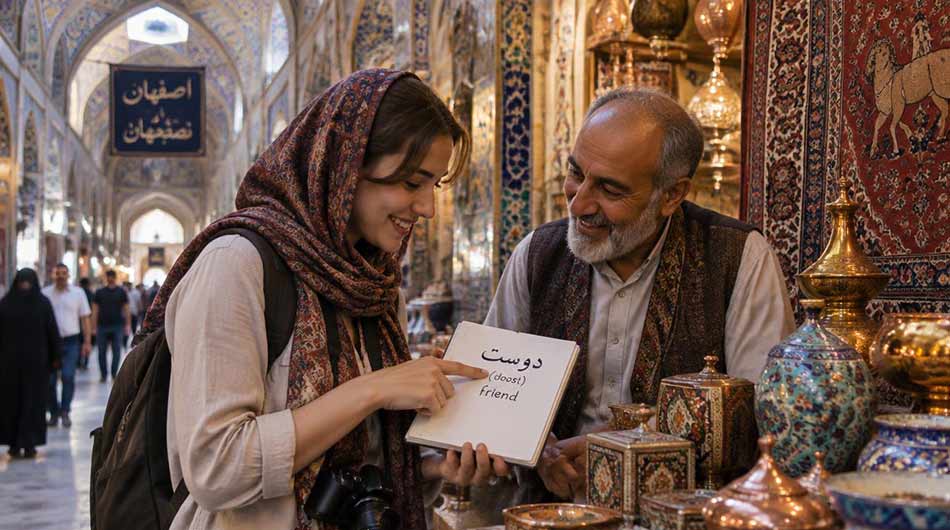
Traveling through Iran becomes a little easier—and often much more memorable—when you know a few Persian words.
Persian, also called Farsi, is the main language spoken in Iran. English is used in many hotels, tourism businesses and among some younger Iranians, but you should not expect everyone you meet to speak English.
The good news is that you do not need to learn Persian before visiting Iran.
A handful of simple phrases can help you order food, take a taxi, ask for directions, shop in a bazaar, check into a hotel and start conversations with local people.
More importantly, making an effort to speak a few Persian words is often appreciated by locals.
This guide introduces the most useful Persian phrases for tourists, with English meanings and simple pronunciation guides.
Do Tourists Need to Speak Persian in Iran?
No.
You can travel around Iran without speaking Persian, particularly if your itinerary focuses on major tourist destinations and you are traveling with an English-speaking guide.
However, knowing a few basic expressions can make everyday situations easier.
You may encounter people who speak little or no English when:
- Taking a local taxi
- Shopping in traditional markets
- Buying snacks or water
- Visiting smaller towns
- Ordering food in local restaurants
- Asking for simple directions
- Speaking with people in rural areas
Even a simple “Salam” or “Merci” can make an interaction warmer.
Persian Pronunciation: A Quick Introduction
Persian pronunciation is generally approachable for English speakers once you learn a few basic sounds.
The pronunciation guides below are intentionally simplified. They are designed to help travelers communicate rather than teach formal Persian pronunciation.
For example:
سلام — Salam — sa-LAAM — Hello
You do not need to pronounce every word perfectly.
Persian speakers will usually understand what you mean from the context.
1. Essential Persian Greetings
These are the first phrases worth learning.
| Persian | Pronunciation | English |
|---|---|---|
| سلام | Salam | Hello |
| خداحافظ | Khodahafez | Goodbye |
| صبح بخیر | Sobh bekheyr | Good morning |
| شب بخیر | Shab bekheyr | Good night |
| ممنون | Mamnoon | Thanks |
| متشکرم | Moteshakeram | Thank you |
| لطفاً | Lotfan | Please |
| ببخشید | Bebakhshid | Excuse me / Sorry |
| خواهش میکنم | Khahesh mikonam | You’re welcome |
The most useful three
If you only remember three expressions, remember:
Salam — Hello
Merci — Thank you
Bebakhshid — Excuse me
They can be used constantly during a trip.
2. How to Say “Thank You” in Persian
You will hear several ways to express thanks.
ممنون — Mamnoon
This is a very common and easy way to say:
Thank you.
مرسی — Merci
Yes, Persian speakers commonly use the French-derived Merci in everyday conversation.
It is particularly easy for international travelers because the pronunciation is almost exactly what English and French speakers expect.
متشکرم — Moteshakeram
This means:
Thank you.
It is slightly more formal.
For everyday travel, Mamnoon and Merci are both easy choices.
3. Useful Persian Phrases for Hotels
Knowing a few phrases can make hotel check-in and everyday requests easier.
| Persian | Pronunciation | English |
|---|---|---|
| رزرو دارم | Rezerv daram | I have a reservation |
| اتاق من کجاست؟ | Otagh-e man kojast? | Where is my room? |
| صبحانه چه ساعتی است؟ | Sobhane che sa’ati ast? | What time is breakfast? |
| وایفای دارید؟ | Wi-Fi darid? | Do you have Wi-Fi? |
| رمز وایفای چیست؟ | Ramz-e Wi-Fi chist? | What is the Wi-Fi password? |
| آب میخواهم | Aab mikhaham | I want water |
| کمک میخواهم | Komak mikhaham | I need help |
A useful phrase
اتاق من کجاست؟
Otagh-e man kojast?
Literally:
Where is my room?
You can replace otagh (room) with other words when asking where something is.
4. Persian Phrases for Restaurants
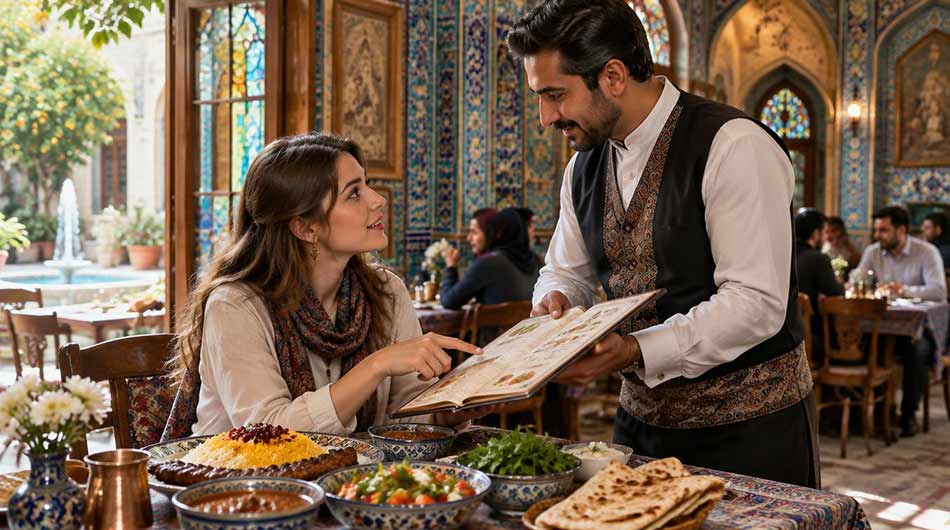
Food is one of the best reasons to learn a few Persian expressions.
Try these:
| Persian | Pronunciation | English |
|---|---|---|
| منوی غذا لطفاً | Menu-ye ghaza lotfan | Menu, please |
| این چیست؟ | In chist? | What is this? |
| این چیست؟ | In chist? | What is this? |
| آب لطفاً | Aab lotfan | Water, please |
| چای لطفاً | Chay lotfan | Tea, please |
| صورتحساب لطفاً | Soorat-hesaab lotfan | The bill, please |
| خیلی خوشمزه است | Kheyli khoshmaze ast | It’s very delicious |
| گیاهخواری | Giyahkhari | Vegetarianism |
| بدون گوشت | Bedoon-e goosht | Without meat |
Asking about food
One of the most useful questions is:
این چیست؟
In chist?
What is this?
Point to a dish and ask.
You may discover something you would never have ordered from an English menu.
5. Persian Phrases for Vegetarian Travelers
Iranian cuisine includes many dishes based on vegetables, herbs, legumes, rice and dairy products, but meat is also common in traditional cuisine.
If you are vegetarian, it can be useful to clearly explain your preference.
من گیاهخوار هستم
Man giyahkhar hastam.
I am vegetarian.
You can also say:
بدون گوشت، لطفاً
Bedoon-e goosht, lotfan.
Without meat, please.
If you are vegan, you may need to explain your requirements more specifically because the distinction between vegetarian and vegan may not always be understood in every setting.
Useful ingredients to ask about include:
گوشت — Goosht — Meat
مرغ — Morgh — Chicken
ماهی — Mahi — Fish
تخممرغ — Tokhm-e morgh — Egg
شیر — Shir — Milk
پنیر — Panir — Cheese
کره — Kere — Butter
6. Persian Phrases for Taxis and Transportation
Transportation is one of the situations where a few Persian words can be particularly useful.
کجا میروید؟
Koja miravid?
Where are you going?
من به … میروم
Man be … miravam.
I am going to …
For example:
من به هتل میروم.
Man be hotel miravam.
I am going to the hotel.
اینجا لطفاً
Inja lotfan.
Here, please.
This is useful when you want to tell a driver where to stop.
چقدر میشود؟
Cegadr mishavad?
How much is it?
You will hear this phrase frequently when discussing prices.
7. Asking for Directions in Persian
Getting around a new city becomes easier if you know a few basic direction words.
| Persian | Pronunciation | English |
|---|---|---|
| کجا؟ | Koja? | Where? |
| اینجا | Inja | Here |
| آنجا | Anja | There |
| راست | Raast | Right |
| چپ | Chap | Left |
| مستقیم | Mostaghim | Straight |
| نزدیک | Nazdik | Near |
| دور | Door | Far |
| خیابان | Khiaban | Street |
| میدان | Meydan | Square |
| ایستگاه | Istgah | Station |
Where is…?
… کجاست؟
… kojast?
For example:
مترو کجاست؟
Metro kojast?
Where is the metro?
هتل کجاست؟
Hotel kojast?
Where is the hotel?
8. Persian for Shopping in Iran
Iranian bazaars are among the most interesting places to practice Persian.
Start with the basics.
این چنده؟
In chande?
How much is this?
خیلی گرونه
Kheyli geroone.
It’s very expensive.
تخفیف دارد؟
Takhfif darad?
Is there a discount?
میخرم
Makharam.
I’ll buy it.
نمیخواهم
Nemikham.
I don’t want it.
فقط نگاه میکنم
Faghat negah mikonam.
I’m just looking.
The last phrase can be particularly useful when browsing a shop without intending to buy something.
9. Numbers You Should Know
Learning numbers can make shopping, transportation and everyday communication easier.
| Number | Persian | Pronunciation |
|---|---|---|
| 0 | صفر | Sefr |
| 1 | یک | Yek |
| 2 | دو | Do |
| 3 | سه | Se |
| 4 | چهار | Chahar |
| 5 | پنج | Panj |
| 6 | شش | Shesh |
| 7 | هفت | Haft |
| 8 | هشت | Hasht |
| 9 | نه | Noh |
| 10 | ده | Dah |
If you learn only the numbers from one to ten, you will already have a useful foundation.
10. Rial, Toman and Prices
Money can be confusing for first-time visitors because prices in Iran are often discussed in toman, while the official currency is the Iranian rial.
When someone gives you a price, make sure you understand which unit they are using.
Useful phrases include:
قیمت چقدر است؟
Gheymat cheghadr ast?
How much does it cost?
تومان یا ریال؟
Toman ya rial?
Toman or rial?
This simple question can prevent misunderstandings.
Because currency practices and exchange conditions can change, travelers should also check current information about Iranian currency before their trip.
11. Persian Phrases for Meeting People
Iranian hospitality is an important part of the travel experience.
You may hear questions that are intended as friendly conversation rather than formal information gathering.
Useful phrases include:
اسم شما چیست؟
Esm-e shoma chist?
What is your name?
اسم من … است
Esm-e man … ast.
My name is …
اهل کجا هستید؟
Ahl-e koja hastid?
Where are you from?
من اهل … هستم
Man ahl-e … hastam.
I am from …
خوشبختم
Khoshbakhtam.
Nice to meet you.
12. Useful Persian Question Words
A few question words can help you understand conversations.
| Persian | Pronunciation | Meaning |
|---|---|---|
| چه؟ | Che? | What? |
| کجا؟ | Koja? | Where? |
| کی؟ | Key? | When? / Who? depending on context |
| چرا؟ | Chera? | Why? |
| چطور؟ | Chetor? | How? |
| چقدر؟ | Cheghadr? | How much? / How many? |
| کدام؟ | Kodam? | Which? |
One particularly useful expression is:
چطور؟ — Chetor? — How?
You will hear variations of this word throughout everyday conversation.
13. Yes, No and Basic Responses
These are essential.
| Persian | Pronunciation | English |
|---|---|---|
| بله | Bale | Yes |
| نه | Na | No |
| شاید | Shayad | Maybe |
| خوب | Khoob | Good |
| خیلی خوب | Kheyli khoob | Very good |
| باشه | Bashe | Okay |
| نمیدانم | Nemidanam | I don’t know |
| نمیفهمم | Nemifahmam | I don’t understand |
The phrase every traveler should know
متوجه نمیشوم
Motavajeh nemishavam.
I don’t understand.
If that is difficult to pronounce, simply saying:
نمیفهمم — Nemifahmam
is easier.
14. How to Ask Someone to Speak Slowly
This can be incredibly useful.
لطفاً آهستهتر صحبت کنید
Lotfan aheste-tar sohbat konid.
Please speak more slowly.
If someone starts speaking Persian very quickly, smile and say:
آهستهتر لطفاً
Aheste-tar lotfan.
More slowly, please.
You do not need to be fluent to have a conversation.
Sometimes slowing the conversation down is enough.
15. Persian Phrases for Emergencies
Hopefully you will never need these phrases, but they are worth knowing.
| Persian | Pronunciation | English |
|---|---|---|
| کمک! | Komak! | Help! |
| دکتر لازم دارم | Doktor lazem daram | I need a doctor |
| بیمارستان کجاست؟ | Bimarestan kojast? | Where is the hospital? |
| پلیس کجاست؟ | Polis kojast? | Where is the police? |
| گم شدهام | Gom shode-am | I am lost |
| پاسپورتم گم شده | Passportam gom shode | My passport is lost |
| لطفاً کمک کنید | Lotfan komak konid | Please help |
Keep important emergency information written somewhere accessible as well. In a stressful situation, communicating by showing a written address or contact number can sometimes be easier than trying to pronounce a sentence.
16. A Few Persian Words That Make Travel More Fun
You do not have to learn complete sentences.
A few individual words can make everyday interactions more enjoyable.
آب
Aab
Water
چای
Chay
Tea
نان
Naan
Bread
غذا
Ghaza
Food
بازار
Bazaar
Market
هتل
Hotel
Hotel
فرودگاه
Foroodgah
Airport
قطار
Ghatâr
Train
اتوبوس
Otobus
Bus
بلیط
Belit
Ticket
17. Persian Politeness: Why “Bebakhshid” Is So Useful
One of the most useful Persian expressions for travelers is:
ببخشید — Bebakhshid
It can mean:
- Excuse me
- Sorry
- Pardon me
You can use it before asking a question:
ببخشید، مترو کجاست؟
Bebakhshid, metro kojast?
Excuse me, where is the metro?
It is a simple and polite way to begin a conversation with someone you do not know.
18. A Note About Persian Hospitality and “Taarof”
Visitors to Iran may encounter a cultural practice known as taarof, a complex system of politeness and social etiquette.
For example, someone may offer you something or politely insist that you take something even when the social meaning is more nuanced than the literal words suggest.
You do not need to understand taarof completely before visiting Iran.
The best approach is to observe the situation, remain polite and ask for clarification when you are unsure.
Learning:
ممنون — Mamnoon
and
نه، ممنون — Na, mamnoon
can be useful when politely declining something.
19. A Mini Persian Conversation for Travelers
Here is a simple example of how several phrases can work together.
At a shop
Traveler:
سلام
Salam.
Hello.
Shopkeeper:
سلام
Salam.
Hello.
Traveler:
این چنده؟
In chande?
How much is this?
Shopkeeper:
…
Traveler:
خیلی گرونه!
Kheyli geroone!
That’s very expensive!
Shopkeeper:
…
Traveler:
باشه، میخرم.
Bashe, mikharam.
Okay, I’ll buy it.
Traveler:
ممنون.
Mamnoon.
Thank you.
You already have enough Persian to have a basic shopping interaction.
20. The 20 Persian Phrases Worth Memorizing
If you do not want to memorize a long list, start with these:
- سلام — Salam — Hello
- خداحافظ — Khodahafez — Goodbye
- ممنون — Mamnoon — Thank you
- لطفاً — Lotfan — Please
- ببخشید — Bebakhshid — Excuse me
- بله — Bale — Yes
- نه — Na — No
- باشه — Bashe — Okay
- این چیه؟ — In chie? — What is this?
- این چنده؟ — In chande? — How much is this?
- … کجاست؟ — … Kojast? — Where is…?
- کمک میخواهم — Komak mikhaham — I need help
- نمیفهمم — Nemifahmam — I don’t understand
- آهستهتر لطفاً — Aheste-tar lotfan — More slowly, please
- آب لطفاً — Aab lotfan — Water, please
- صورتحساب لطفاً — Soorat-hesaab lotfan — The bill, please
- بدون گوشت — Bedoon-e goosht — Without meat
- تومان یا ریال؟ — Toman ya rial? — Toman or rial?
- خیلی خوب — Kheyli khoob — Very good
- خوشبختم — Khoshbakhtam — Nice to meet you
How to Learn These Phrases Before Your Trip
You do not need to spend months studying Persian.
A few minutes every day can make a noticeable difference.
Day 1: Greetings
Learn:
- Salam
- Khodahafez
- Mamnoon
- Lotfan
- Bebakhshid
Day 2: Numbers and prices
Learn:
- 1–10
- In chande?
- Gheymat cheghadr ast?
- Toman ya rial?
Day 3: Food
Learn:
- Aab
- Chay
- Ghaza
- Bedoon-e goosht
- Soorat-hesaab lotfan
Day 4: Directions
Learn:
- Koja?
- Inja
- Anja
- Raast
- Chap
- Mostaghim
Day 5: Transportation
Learn:
- Hotel kojast?
- Metro kojast?
- Man be … miravam.
- Inja lotfan.
Day 6: Conversation
Practice:
- Esm-e shoma chist?
- Esm-e man … ast.
- Ahl-e koja hastid?
- Man ahl-e … hastam.
Day 7: Review
Try to use the phrases without looking at the pronunciation guide.
The goal is not perfect Persian.
The goal is confidence.
Should You Learn the Persian Alphabet?
Not necessarily.
For a short trip, spoken phrases and numbers are more immediately useful.
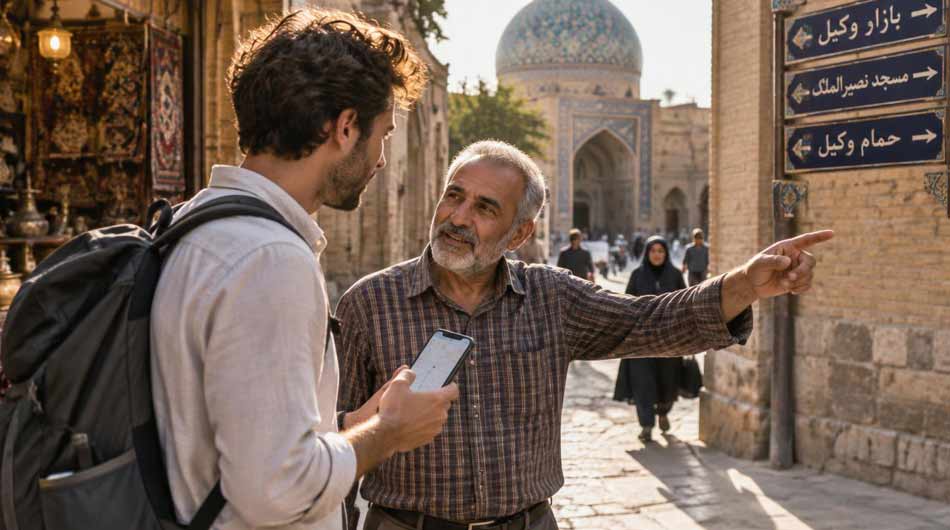
However, learning a few Persian letters can be surprisingly helpful because you will see Persian writing everywhere:
- Street signs
- Restaurant menus
- Shop signs
- Train stations
- Bus terminals
- Product packaging
If you plan to spend several weeks in Iran or return regularly, learning the Persian alphabet can be worthwhile.
Using Your Phone as a Language Tool
A translation app can be useful, but it should not be your only communication method.
Before traveling, consider preparing offline copies of:
- Your hotel address
- Your destination addresses
- Important phone numbers
- Transportation details
- Medical information
- A small Persian phrase list
This is particularly useful because internet access and connectivity conditions can change.
Having essential information available offline means you are not completely dependent on a live internet connection.
Let Your Guide Help You With Persian
If you are traveling with an English-speaking local guide, you do not need to worry about learning enough Persian to handle every situation.
A guide can help with:
- Communication
- Transportation
- Restaurants
- Shopping
- Historical sites
- Local interactions
- Translation
But learning a few expressions yourself is still worthwhile.
Saying Salam, Mamnoon or Bebakhshid can create a much more personal interaction than relying on translation for every conversation.
How IranParadise Can Help
For travelers who do not speak Persian, having local support can make a multi-city trip considerably easier.
IranParadise provides English-speaking guides, transportation, transfers and tailor-made travel services, allowing visitors to explore Iran while receiving local assistance throughout their itinerary.
This can be particularly useful when a trip includes smaller towns, rural areas, traditional markets or destinations where English may be less commonly spoken.
At the same time, travelers are encouraged to learn a few Persian phrases themselves.
You do not need to speak Persian fluently.
Even a simple “Salam” can be the beginning of a memorable interaction.
Frequently Asked Questions
What language is spoken in Iran?
Persian, also called Farsi, is the main language of Iran. Iran is also home to communities speaking other languages and dialects.
Do I need to learn Persian before visiting Iran?
No. You can travel without speaking Persian, particularly when using English-speaking tourism services. However, learning a few basic phrases can make everyday interactions easier.
Is Persian difficult for English speakers?
The writing system and grammar are different from English, but tourists do not need to learn the language fully. Basic travel phrases can be memorized relatively quickly.
Is “Merci” used in Iran?
Yes. “Merci” is commonly used in everyday Persian conversation to say thank you.
How do I say hello in Persian?
سلام — Salam means hello.
How do I say thank you in Persian?
You can say ممنون — Mamnoon, متشکرم — Moteshakeram, or the commonly used مرسی — Merci.
How do I ask “How much is this?” in Persian?
Say:
این چنده؟ — In chande?
How do I say “I don’t understand”?
Say:
نمیفهمم — Nemifahmam.
How do I say “Excuse me”?
Say:
ببخشید — Bebakhshid.
Can I use English in Iran?
English is used in many tourism-related settings, particularly in major cities and hotels, but English proficiency varies considerably. A few Persian phrases can be very useful outside tourist-oriented environments.
Quick Persian Cheat Sheet for Travelers
Hello: Salam
Goodbye: Khodahafez
Thank you: Mamnoon / Merci
Please: Lotfan
Excuse me: Bebakhshid
Yes: Bale
No: Na
Okay: Bashe
How much?: Cheghadr?
How much is this?: In chande?
Where?: Koja?
Where is the hotel?: Hotel kojast?
I don’t understand: Nemifahmam
More slowly, please: Aheste-tar lotfan
Water, please: Aab lotfan
The bill, please: Soorat-hesaab lotfan
Without meat: Bedoon-e goosht
Help: Komak
Good: Khoob
Very good: Kheyli khoob
Final Thoughts
You do not need to speak Persian to enjoy Iran.
But learning a few Persian phrases can change the way you experience the country.
A greeting at a hotel, a simple question in a bazaar, ordering tea in a local café or thanking someone who helped you can become more than a practical transaction.
It can become a small cultural connection.
So before your trip, learn a few words, practice saying them out loud and do not worry about having a perfect accent.
The effort itself is part of the experience.
Salam, Iran!
Tags:basic Persian phrases, Farsi for Iran travel, Farsi phrases for tourists, Iran travel phrases, iranparadise, Persian language for travelers, Persian Phrases for Tourists, Persian words for tourists, useful Persian phrases, درنا گشت