

Women Traveling in Iran: A Complete Guide for Female Travelers
 Women Traveling in Iran: A Complete Guide for Female Travelers
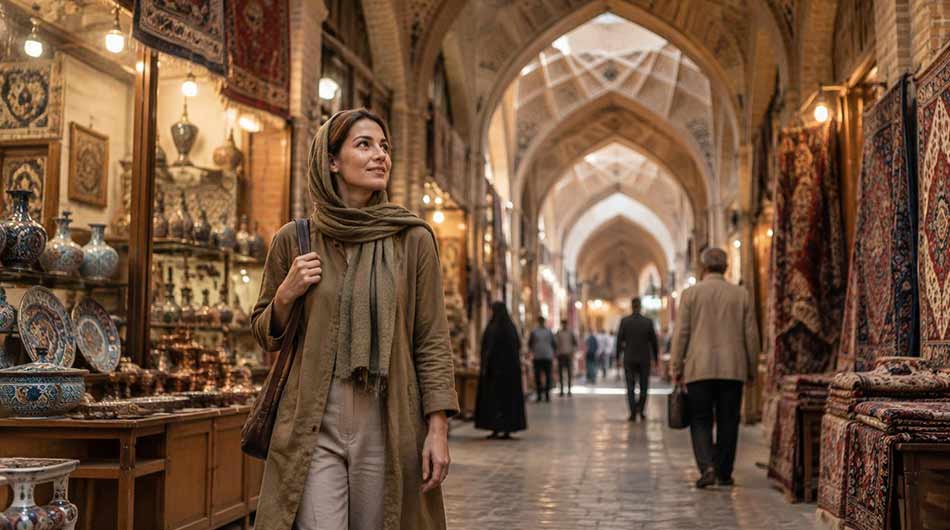 Women Traveling in Iran: A Complete Guide for Female Travelers
Traveling to a new country often means discovering unfamiliar traditions, different ways of life and experiences that stay with you long after the journey ends.
For women researching Iran, understanding the country’s cultural traditions, legal requirements and practical travel considerations is particularly important. Iran is home to remarkable historical architecture, traditional gardens, lively bazaars, distinctive regional cuisines and diverse landscapes. At the same time, female visitors need to understand local laws, dress requirements and the potential risks associated with travel.
This guide explains what women should know when researching a trip to Iran, from clothing and cultural etiquette to accommodation, transportation and travel preparation.
Important travel advisory: As of October 2026, the UK Foreign, Commonwealth & Development Office advises against all travel to Iran, and other governments have issued similarly serious warnings. The security situation may change quickly and can affect flights, borders, communications and access to assistance. Check the latest advisory issued by your own government before making travel plans. This guide is for information and does not imply that travel is currently advisable.
1. What Should Women Know Before Traveling to Iran?
Iran has its own legal framework, cultural expectations and social customs. Visitors should understand these before considering a trip.
Here are some of the main points to research:
- Dress requirements: Women are subject to public dress regulations, including head covering and modest clothing.
- Local laws: Rules concerning public behavior, relationships, photography and other activities may differ significantly from those in a visitor’s home country.
- Travel conditions: Security, transportation and communication services can be disrupted.
- Payment: International bank cards may not work as expected, so payment arrangements require advance planning.
- Travel insurance: Some policies exclude destinations covered by government travel warnings.
- Nationality and passport: Visa requirements, consular assistance and other restrictions can vary by nationality, including for dual nationals.
The best starting point is to check official travel advice and confirm requirements with the relevant authorities before making any arrangements.
2. Dress Code for Women in Iran
Clothing is one of the most important practical considerations for female visitors.
Official travel guidance describes requirements for women to cover their hair in public and wear clothing that covers their arms and legs. Additional rules may apply at religious sites. Enforcement and circumstances can change, so visitors should not rely exclusively on older travel photographs or personal accounts.
What Clothing Should You Pack?
For practical preparation, consider bringing:
- Lightweight, loose-fitting trousers or long skirts
- Long-sleeved tops or tunics
- A lightweight outer layer that covers the body appropriately
- A headscarf
- Comfortable walking shoes
- Weather-appropriate layers for different regions and seasons
Lightweight fabrics can be useful in warmer weather, while a warmer outer layer may be necessary during colder months or in mountainous destinations.
What Should You Wear at Religious Sites?
Some religious sites have additional dress requirements. Women may be asked to wear a chador, a full-body covering, before entering.
Check the requirements of each site in advance and follow instructions provided by its staff.
Can You Wear Your Own Style?
Travelers can bring clothing that suits their personal style while ensuring it meets the applicable local requirements. However, visitors should understand that personal preference does not override local law.
For the latest requirements, consult official guidance rather than assuming that clothing worn by some people in social media posts represents the rules visitors are expected to follow.
3. Is Iran Suitable for Solo Female Travel?
Solo travel can offer independence and flexibility, but the decision to travel alone to Iran requires careful consideration of both everyday practicalities and the current security environment.
Women researching a future trip should consider:
- Whether their government advises against travel
- Whether their nationality creates specific legal or consular risks
- Whether suitable travel insurance is available
- How they would obtain assistance during an emergency
- Whether their accommodation and transportation arrangements are reliable
- Whether they can communicate if internet access is disrupted
For trips that are considered appropriate and possible under current official guidance, advance planning can reduce logistical uncertainty. However, no checklist or organized itinerary can eliminate wider security risks.
For additional planning advice, see our related article, Solo Travel in Iran: A Complete Guide for Independent Travelers.
4. Understanding Iranian Culture and Social Etiquette
Iranian culture includes diverse regional traditions, different lifestyles and a long history of hospitality. Social interactions can vary considerably between families, cities, rural communities and generations.
A few cultural concepts can help visitors understand everyday interactions.
Taarof: A Traditional Form of Courtesy
Taarof is a complex system of politeness that influences some social interactions in Iran.
For example, someone may make a polite offer that requires clarification before you know whether it is a genuine invitation or simply a courteous expression.
If you are unsure, respond politely and ask for clarification. There is no need to understand every nuance before interacting with people.
Greetings and Personal Space
A simple Persian greeting such as Salam (hello) is a useful way to begin a conversation.
Customs around handshakes and physical contact can vary. When unsure, wait for the other person to indicate what is appropriate rather than assuming that the customs of your home country apply.
Accepting Invitations
You may encounter friendly conversations or invitations during your travels. Use your own judgment, and do not feel obligated to accept an invitation if you are uncomfortable.
A courteous response and a clear boundary can coexist.
For more useful expressions, read our guide to Persian Phrases for Tourists: Essential Farsi for Iran Travel.
5. Accommodation Tips for Female Travelers
Accommodation is an important part of travel planning, particularly for visitors who are unfamiliar with a destination.
Possible accommodation types in Iran include hotels, boutique properties, traditional houses, guesthouses and eco-lodges. Availability and booking arrangements depend on the destination, the property and current operating conditions.
What Should You Look for When Choosing Accommodation?
Consider the following:
- Recent, credible reviews
- A convenient location
- Clear check-in and cancellation policies
- Reliable contact information
- Access to transportation
- Staff availability and communication
- Emergency arrangements
- Confirmation that the property can accommodate your nationality and booking requirements
Solo travelers may prefer a property with a staffed reception and straightforward transport access. This is a personal planning preference, not a guarantee of safety.
If you are planning a multi-city itinerary, confirm each booking and transfer before departure.
Read our related guide: Where to Stay in Iran: Hotels, Traditional Houses & Eco-Lodges.
6. Getting Around Iran as a Woman
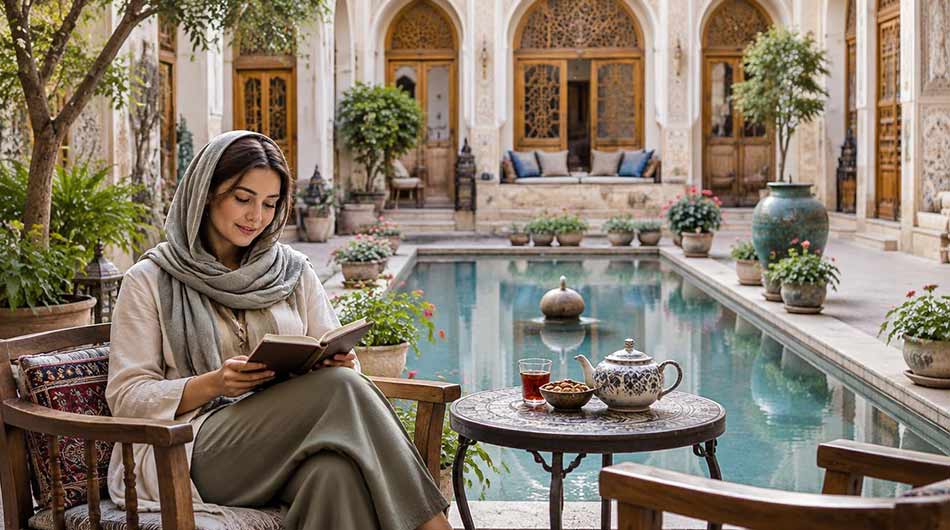 6. Getting Around Iran as a Woman
Transportation choices depend on your route, budget, schedule and the conditions at the time of travel.
Common options include intercity trains, buses, domestic flights, taxis and private cars with drivers.
Public Transportation
Public transportation can be useful for exploring cities, but services and arrangements vary by location.
Before using a service, check its current operating status, payment arrangements and any local guidance relevant to passengers.
Taxis and Private Transfers
For pre-arranged journeys, confirm the destination, pickup point, fare or payment terms and the identity of the service provider.
If traveling alone, it can be helpful to share your planned route and expected arrival time with a trusted contact.
Long-Distance Travel
For journeys between cities, confirm departure times and tickets through reliable sources. Do not assume that previously published schedules remain valid during periods of disruption.
For a detailed comparison of transportation options, see Getting Around Iran: Trains, Buses, Domestic Flights and Private Drivers.
7. Communication and Internet Access
Being able to contact your accommodation, a trusted person or relevant authorities can be important when traveling.
However, internet access and communications in Iran may be restricted or disrupted. Travelers should prepare for the possibility that mobile data, messaging services or international calls may not work reliably.
Before any trip, consider preparing:
- Offline maps
- Accommodation addresses saved on your phone
- Copies of travel documents
- Important telephone numbers stored offline
- Written directions for essential journeys
- A backup way to contact someone where possible
Do not rely on a single app or internet connection for emergency communication.
Our guide Internet in Iran for Tourists: SIM Cards, Wi-Fi & Connectivity provides additional information about preparing for connectivity limitations.
8. Photography and Privacy
Iran has important historical and cultural sites, but visitors should understand the restrictions surrounding photography.
Official travel advice warns that photographing military installations, government facilities, critical infrastructure and public demonstrations can lead to serious consequences. Some sensitive locations may not be clearly marked.
For female travelers, practical considerations also include respecting other people’s privacy.
- Ask permission before taking close-up photographs of individuals.
- Follow photography rules at religious and historical sites.
- Avoid photographing restricted facilities.
- Do not assume that a location is safe to photograph simply because other people are doing so.
- Check current guidance before carrying drones or specialized electronic equipment.
When uncertain, put the camera away and ask an authorized staff member.
9. Health, Personal Items and Travel Insurance
Preparation for a trip should include health needs as well as transportation and accommodation.
Consider packing:
- Prescription medication in its original packaging
- Copies of prescriptions and relevant medical documentation
- Personal hygiene products
- Necessary menstrual products
- Any essential items that may be difficult to replace
- A basic first-aid kit appropriate to your needs
Before traveling, check medication restrictions and whether your medication requires special documentation.
Travel Insurance
 Travel Insurance
Read the policy carefully rather than assuming that a standard policy covers every situation.
Confirm whether it covers your destination, planned activities, medical treatment, evacuation and unexpected extensions to your stay. If an official advisory warns against travel, your policy may restrict or exclude coverage.
For current conditions, consult the insurer directly and obtain written confirmation of any relevant coverage.
10. What Should You Do If You Feel Uncomfortable?
No traveler should feel obliged to remain in an interaction that makes them uncomfortable.
If you experience unwanted attention or feel unsafe:
- Move toward a populated, staffed or otherwise appropriate location.
- Contact someone you trust when it is safe to do so.
- Seek help from your accommodation or a reputable service provider when appropriate.
- Keep important documents and emergency contacts accessible.
- Follow instructions from relevant local authorities during an immediate emergency.
If you are planning a future trip, identify suitable emergency contacts in advance. Remember that consular assistance may be limited, depending on your nationality and the diplomatic situation.
11. Can a Local Tour Company Help Female Travelers?
Professional travel services can help with logistics, although they cannot remove legal or security risks.
Depending on current availability, services may include:
- Itinerary planning
- Hotel reservations
- Transportation arrangements
- Local guides
- Airport transfers
- Historical and cultural tours
- Visa-related information and assistance
Some travelers prefer to organize their entire itinerary independently, while others choose support for specific journeys or destinations.
If considering a service provider, verify its credentials, current operating status, cancellation terms and ability to support your particular travel needs.
IranParadise provides travel-planning and tourism services for visitors to Iran. Travelers can explore the company’s available services and contact its team for information about current operating conditions and arrangements.
Important: Professional assistance should not be interpreted as confirmation that travel is currently safe or advisable.
12. Common Mistakes to Avoid
 12. Common Mistakes to Avoid
Relying on Old Travel Blogs
Laws, enforcement practices, transport services and security conditions can change. Check current official guidance.
Assuming Every Region Has the Same Customs
Iran is geographically and culturally diverse. Practices may differ by community, setting and occasion.
Booking Without Checking Current Conditions
Before paying for flights, accommodation or tours, confirm the current status of your route and the relevant cancellation terms.
Depending Entirely on Mobile Internet
Prepare offline information and alternative communication arrangements.
Assuming Travel Insurance Covers Everything
Confirm exclusions and restrictions directly with your insurer.
Treating Personal Accounts as Legal Advice
A visitor’s experience may be useful context, but it does not establish what the law requires or how it may be enforced.
Frequently Asked Questions
Is Iran safe for female tourists?
Safety depends on nationality, itinerary, legal circumstances and current conditions. As of October 2026, several governments advise against travel to Iran. Review the latest official advisory before deciding whether to travel.
What should women wear in Iran?
Official guidance describes requirements for women to cover their hair and wear clothing that covers their arms and legs in public. Additional requirements may apply at religious sites. Check current official guidance before departure.
Can a woman travel alone in Iran?
Women can encounter specific legal, cultural and practical considerations. Anyone considering solo travel should assess current official travel advice, nationality-specific risks, accommodation, transportation and emergency arrangements before making plans.
Do female travelers need a local guide?
A guide is not necessarily required for every activity, but professional guidance may help with historical sites, cultural context and logistical arrangements. It does not eliminate broader travel risks.
Can women take photographs in Iran?
Photography is possible in many ordinary tourist settings, but restrictions apply to sensitive sites and certain events. Ask permission before photographing people closely and follow all posted instructions and official guidance.
What should women know about Iranian customs?
Visitors should learn about local greetings, taarof, dress expectations and etiquette around personal contact. Customs vary, so polite questions and respectful boundaries are useful.
Should I book my trip to Iran now?
Do not make a decision based solely on this article. As of October 2026, several governments advise against travel to Iran. Check your government’s current advisory, the status of transportation routes and your insurance coverage before making any plans.
Understanding Iran before visiting is about more than preparing a packing list. It means learning about local customs, understanding applicable laws, making realistic plans and being aware of the risks that may affect your journey.
For women researching Iran, reliable and current information is especially important. Historical attractions, traditional architecture and cultural experiences can be valuable subjects to explore, but travel decisions should always reflect the actual conditions at the time.
Check official travel guidance, prepare carefully and make informed decisions based on your own circumstances.
Good travel planning begins with reliable information.
Tags:Best time to travel to iran, best tour operator iran, Cultural sites of Iran, cultural tourism Iran, Custom Iran tours, Economy of Travel, female travel in Iran, female travelers Iran, hotels in Iran, Iran accommodation, Iran adventure tours, iran attractions, Iran cultural tours, iran destinations, Iran dress code for women, Iran eco lodges, Iran guesthouses, iran Solo trip, iran tour, Iran tour packages, Iran tourism plan, iran tourist attractions, Iran tours, Iran travel agency, Iran travel requirements, Iran travel safety, Iran Travel Tips, Iran travel tips for women, Iranian culture for tourists, iranparadise, Iranparadise tourism, Iranparadise tourism company, Luxury tours in Iran, must-visit Iran, Private guides in Iran, Private tours in Iran, solo female travel Iran, travel guide Iran, Travel to Iran with Iranparadise, where to stay in Iran, women tourists in Iran, Women Traveling in Iran, درنا گشت
Thanks for explaining brittle nails as a useful starting point.
Thanks for explaining healthy-looking nails without jumping to conclusions.
Thanks for explaining healthy-looking nails while keeping expectations realistic.
Thanks for explaining nail hygiene and knowing when to seek advice.
Thanks for explaining brittle nails with attention to personal risk factors.
Helpful explanation of mindfulness for beginners for anyone wanting to learn more.
Helpful explanation of nervous system regulation in a balanced way.
This encourages a more informed look at bloating and diet.
Helpful explanation of the effects of ongoing stress and why it matters for wellbeing.
Really enjoyed this read. This adds useful context to the discussion.
These points make it easier to think about artificial sweeteners and digestive comfort.
It’s worth learning more about restful sleep.
A useful article for anyone curious about digestive enzymes and gas.
Thanks for the article. The step-by-step guidance makes this useful.
Helpful post, and the topic is presented clearly.
Useful points here for understanding sugary carbonated drinks and digestion.
This offers practical context for understanding artificial sweeteners and digestive comfort.
A helpful starting point for understanding balanced meals and brain health.
There is a lot to learn about sleep and focus.
Thanks for the article. The useful reminders makes this useful.
Thanks for the article. These ideas makes this useful.
Thanks for putting the focus on useful information about bloating and diet.
This article gives readers a useful place to start with bloating and diet.
Thanks for sharing these insights on restful sleep.
Thanks for making the details about artificial sweeteners and digestive comfort easy to understand.
This is a useful starting point for a conversation about sugary carbonated drinks and digestion.
An informative post. An enjoyable and informative read.
An informative read on carbonation and stomach bloating.
The article handles the topic of artificial sweeteners and digestive comfort in a clear way.
The details about healthy lifestyle choices are useful.
The discussion of general wellbeing adds useful context.
Useful context for anyone learning about mental clarity.
I appreciate the emphasis on understanding sodium intake and water retention rather than guessing.
Helpful post, and the recommendations is presented clearly.
A clear and helpful article. Glad I came across this post.
This makes the topic of carbonation and stomach bloating less confusing.
This is a clear introduction to cognitive function.
The section on foods that may help with abdominal bloating was especially useful.
Thanks for the article. These ideas makes this useful.
This provides a balanced introduction to foods that may help with abdominal bloating.
The section on carbonation and stomach bloating was especially useful.
Nice work on this post; Well done and thanks for sharing.
A well-organized discussion of carbonation and stomach bloating.
The details about sugary carbonated drinks and digestion are worth thinking about.
Good points about brain function and everyday wellbeing.
This article gives readers a useful place to start with foods that may help with abdominal bloating.
I appreciate how simply the article explains digestive enzymes and gas.
This makes it easier to ask informed questions about sodium intake and water retention.
Thanks for sharing a reader-friendly explanation of artificial sweeteners and digestive comfort.
This gives a helpful framework for thinking about bloating and diet.
This is a thoughtful overview of bloating and diet and everyday wellness.
I appreciate the clear language used to describe foods that may help with abdominal bloating.
Helpful information about digestive enzymes and gas.
It is helpful to see water retention and digestive bloating discussed in one place.
Good explanation of how to think more carefully about carbonation and stomach bloating.
This makes mental clarity at work easier to understand.
A clear and helpful article. This adds useful context to the discussion.
The points about healthy sleep habits are easy to follow.
Nice work on this post; Looking forward to reading more.
Well presented information. Well done and thanks for sharing.
An informative post. Good work making the subject approachable.
Good reminder to learn more about mindful routines.
The practical focus on cognitive health is appreciated.
An informative overview of relaxation and focus.