

Alamut Castle History: Hassan Sabbah, the Ismailis & the Fall of Alamut
 Alamut Castle History: Hassan Sabbah, the Ismailis & the Fall of Alamut
 Alamut Castle History: Hassan Sabbah, the Ismailis & the Fall of Alamut
Few castles in Iran have inspired as many stories, legends, and historical debates as Alamut Castle.
Perched dramatically in the Alborz Mountains of northern Iran, Alamut became famous as the stronghold of Hassan Sabbah and the political and intellectual center of the Nizari Ismailis. Over the centuries, however, the castle’s real history became intertwined with legends about secret societies, assassins, and hidden mountain fortresses.
The historical reality is even more fascinating.
Alamut was not simply an isolated medieval castle. It was the center of a wider network of fortifications, communities, agricultural systems, and intellectual activity that developed across the mountainous region of northern Iran.
In 2026, this extraordinary cultural landscape received international recognition when Alamūt Castle and Related Fortifications were inscribed on the UNESCO World Heritage List. The serial property includes Alamut Castle and six associated fortifications, providing important evidence of the Nizari Ismaili cultural tradition in the Alborz Mountains.
In this article, we explore the history of Alamut Castle, the rise of Hassan Sabbah, the Nizari Ismaili state, the legends surrounding the so-called Assassins, and the eventual fall of Alamut.
Where Is Alamut Castle?
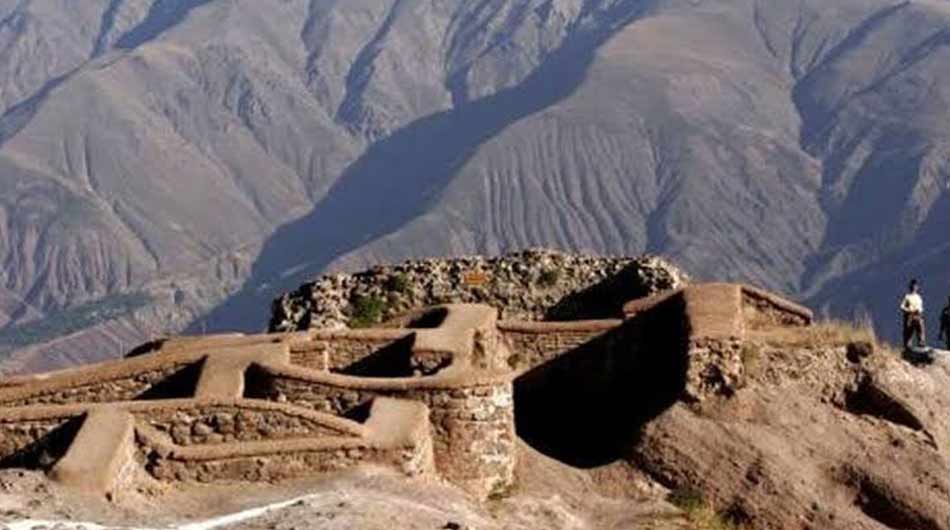
Alamut Castle is located in the Alamut Valley of Qazvin Province, in the Alborz Mountains of northern Iran.
The fortress stands on a dramatic rocky elevation near the village of Gazor Khan, overlooking the surrounding mountain landscape.
Its location was one of its greatest strengths.
Steep cliffs, narrow approaches, and difficult mountain terrain made the fortress exceptionally difficult to attack. The geography provided a natural defensive system that was reinforced by walls, towers, storage facilities, water systems, and other structures.
The castle’s location also explains why Alamut became such an important center for a community seeking to survive in a politically hostile environment.
When Was Alamut Castle Built?
The history of Alamut is older than the arrival of Hassan Sabbah.
According to the current UNESCO evaluation, archaeological evidence indicates that several castles in the Alamut region have pre-Islamic origins, while Alamut Castle itself was built in the 9th century by the Jostanid ruler Vahsudan ibn Marzuban, who died in 865 CE.
Later, the fortress passed through different periods of control before becoming associated with the Nizari Ismailis.
This long history is important because Alamut was not created from nothing in the 11th century.
Instead, Hassan Sabbah took control of an already strategically important mountain fortress and transformed it into the center of a much larger political, religious, and intellectual network.
What Does the Name Alamut Mean?
The origin of the name Alamut has been surrounded by legend.
One traditional story says that an eagle indicated the location of the fortress to a Daylamite ruler. The name has consequently been connected to words interpreted as referring to an eagle and being taught or shown.
The exact linguistic history is more complicated, and the legendary explanation should not necessarily be treated as established historical fact.
What is certain is that the name became closely associated with the mountain fortress and eventually with the entire surrounding region.
Hassan Sabbah and the Capture of Alamut
The most important chapter in the history of Alamut began in the late 11th century with Hassan Sabbah.
Hassan Sabbah was an Ismaili religious leader and political strategist who became one of the most important figures in the history of the Nizari Ismailis.
In 1090 CE, Hassan Sabbah gained control of Alamut through a carefully organized strategy of infiltration rather than a conventional military assault. Encyclopaedia Iranica identifies this event as a major turning point that marked the beginning of the Persian Ismailis’ open revolt against the Seljuqs and the foundation of what became the Nizari Ismaili state in Persia.
Once Alamut was under his control, Hassan Sabbah transformed the fortress into his headquarters.
He strengthened its defenses and developed the surrounding agricultural and irrigation systems, helping make the stronghold more self-sufficient.
Who Was Hassan Sabbah?
Hassan Sabbah was born in Qom in the mid-11th century and later became deeply involved with Ismaili teachings.
After studying and traveling extensively, he developed a strategy for establishing an independent Ismaili presence within the territories dominated by the Seljuqs.
His choice of Alamut was strategic.
The fortress was located far from the main centers of Seljuq power and was protected by difficult mountain terrain.
According to Encyclopaedia Iranica, Hassan Sabbah captured Alamut in 1090 and subsequently made the fortress highly defensible while improving cultivation and irrigation in the valley. He also established an important library there.
Hassan Sabbah remained at Alamut until his death in 1124.
His leadership established the foundations for a political and religious system that survived for more than a century after his death.
Alamut as the Center of the Nizari Ismailis
After Hassan Sabbah took control of Alamut, the fortress became the center of the Nizari Ismaili movement in Persia.
The Nizari Ismailis emerged from a succession dispute within the wider Ismaili tradition following the death of the Fatimid Imam-Caliph al-Mustansir in 1094.
Hassan Sabbah supported the claim of Nizar, the elder son of al-Mustansir, and the Persian Ismailis who followed this line subsequently became known as Nizaris.
Alamut became the headquarters of this community.
From there, a network of mountain fortresses developed across parts of Iran and later Syria.
UNESCO describes Alamut from the late 11th century onward as the political, military, and intellectual center of the Nizari Ismailis, whose influence extended across Iran and the wider Islamic world.
Alamut Was More Than a Fortress
One of the biggest misconceptions about Alamut is that it was simply a military stronghold.
The historical evidence suggests something much more sophisticated.
The major Ismaili castles functioned as fortified communities. They could contain administrative centers, agricultural facilities, water systems, storage areas, and centers of learning.
Encyclopaedia Iranica notes that the larger Ismaili castles could function almost as complete towns, serving as residences for governors and officials as well as centers of learning and study. Libraries containing manuscripts and scientific instruments were also maintained inside some of the fortresses.
This is one reason the UNESCO recognition is significant.
The value of Alamut lies not only in its walls but in the wider cultural system represented by the site.
The Library of Alamut
Alamut was also associated with an important intellectual tradition.
Hassan Sabbah established a library at the fortress, and according to historical sources, its collection eventually included a significant number of manuscripts and scientific instruments.
The library was destroyed during the Mongol capture of Alamut in 1256.
Although the original collection did not survive, its intellectual legacy continued through manuscripts copied from works that had once been held at Alamut and through the writings of later historians and scholars.
The existence of this library challenges the simplistic image of Alamut as merely a fortress associated with warfare.
It was also a place where ideas, scholarship, religious thought, and literature were preserved and developed.
How Did Alamut Survive Seljuq Attacks?
The Seljuq rulers regarded the Ismailis as a serious political and religious challenge.
As a result, Alamut came under repeated military pressure.
Yet its geographical position made a successful assault extremely difficult.
The fortress had been designed to survive isolation.
Food-storage facilities, cisterns, irrigation systems, and carefully managed agricultural resources allowed the inhabitants to withstand prolonged periods of siege.
According to Encyclopaedia Iranica, Alamut successfully resisted a major Seljuq siege in the early 12th century, and the fortress remained secure as the Ismaili state consolidated its position.
The mountains were therefore not simply the location of the castle.
They were part of its defense.
The Network of Alamut Fortresses
 The Network of Alamut Fortresses
Alamut did not exist alone.
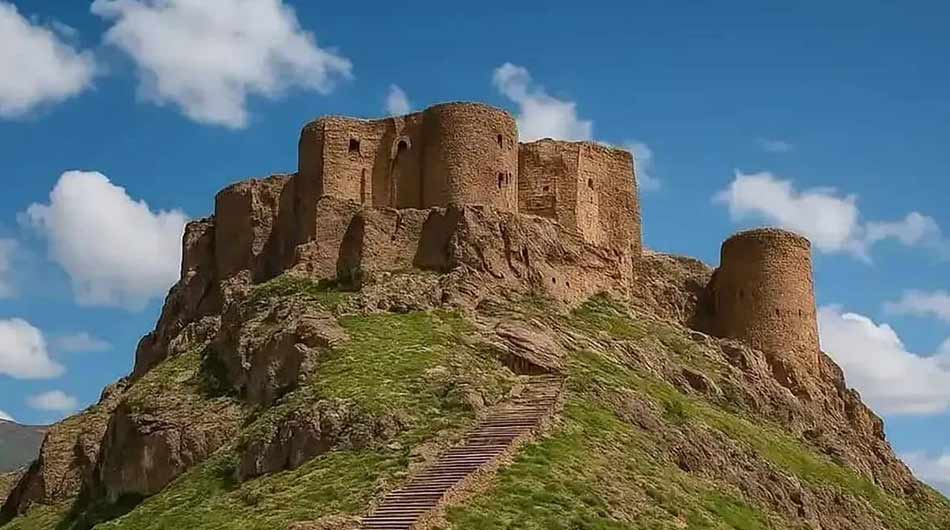
Over time, the Nizari Ismailis controlled or established numerous fortifications across different regions.
Within the area recognized by UNESCO today, the property includes seven component sites:
- Alamut Castle
- Lambesar
- Navizarshah
- Shams Kelayeh
- Qostinlar
- Shirkouh
- Ilan
These fortifications were strategically positioned throughout the rugged Alborz landscape.
Together, they demonstrate the scale of the system that developed around Alamut.
Why Were the Ismaili Castles Built in the Mountains?
The geography of the Alborz Mountains offered several advantages.
Mountain fortresses could:
- Control important routes
- Provide natural defensive barriers
- Make large-scale military attacks difficult
- Protect local communities
- Store food and water
- Support agricultural production
- Provide isolated centers for administration and learning
The Ismailis took advantage of these characteristics and developed a network in which natural geography and human engineering worked together.
UNESCO’s evaluation specifically highlights the relationship between the fortifications and the surrounding mountainous environment.
The Legend of the Assassins
Perhaps no part of Alamut’s history is more famous — or more misunderstood — than its association with the Assassins.
Medieval European sources helped spread stories about a mysterious group of mountain warriors who carried out targeted killings under the command of a secretive leader.
Over time, these stories became increasingly elaborate.
The word “Assassin” itself eventually entered several European languages, and Alamut became strongly associated with this image.
But historians caution against treating popular legends as straightforward historical accounts.
The Nizari Ismailis were a religious and political community with a complex organization, intellectual tradition, and network of fortified settlements.
Their history cannot be reduced to the word “Assassins.”
Modern scholarship therefore distinguishes between the historical Nizari Ismailis and the highly romanticized image that developed in later literature and popular culture.
Alamut in Popular Culture
The legend of Alamut has continued to influence writers, filmmakers, game designers, and storytellers.
The castle has appeared in novels and popular histories and has inspired fictional interpretations of Hassan Sabbah and the Assassins.
This has helped make Alamut internationally famous.
At the same time, popular culture has often blurred the line between documented history and legend.
For travelers visiting Alamut today, understanding this distinction makes the experience more meaningful.
The real story of Alamut — its political struggles, religious history, intellectual life, architecture, agriculture, and survival in the mountains — is already extraordinary without the need for exaggeration.
The Successors of Hassan Sabbah
Hassan Sabbah died in 1124 CE.
He was succeeded by Kiya Buzurg-Umid, who continued to develop the Nizari Ismaili state.
During the following decades, Alamut remained the center of an organized network of fortresses and communities.
The political and intellectual history of the Alamut period continued through several successive leaders.
This period lasted for more than 160 years, from the capture of Alamut in 1090 until the Mongol conquest in 1256. Encyclopaedia Iranica describes the Persian Nizari state as lasting from 1090 to 1256.
The Intellectual Life of Alamut
The Alamut period was not defined solely by military conflict.
The Nizari Ismailis developed their own intellectual and literary traditions during this period.
Persian became increasingly important in the intellectual and religious activities of the Persian Nizaris, and historical chronicles were produced during the Alamut period.
Although many original works were later lost, later historians drew upon Nizari sources when documenting the history of the movement.
This intellectual dimension is an essential part of understanding why UNESCO describes Alamut as not only a political and military center but also an intellectual center.
The Mongol Invasion and the Fall of Alamut
The final great chapter of medieval Alamut began with the arrival of the Mongols.
By the middle of the 13th century, the Mongol Empire had expanded across much of the region.
The Nizari Ismaili strongholds eventually faced overwhelming Mongol military pressure.
In 1256, Rukn al-Din Khurshah, the final lord of Alamut, surrendered to the Mongols.
Alamut was subsequently captured and destroyed.
UNESCO’s current evaluation records the Mongol capture and destruction of the fortress in 1256, followed by partial rebuilding for Mongol use.
This brought the territorial Nizari Ismaili state centered on Alamut to an end.
What Happened to Alamut After 1256?
The story of Alamut did not end completely with the Mongol conquest.
The fortress was partially rebuilt and continued to have various uses over the centuries.
UNESCO’s evaluation notes that after the Mongol period, the castle experienced different phases of use, including periods as a prison and later use by nobles and princes before eventual abandonment.
The political importance of Alamut disappeared, but its physical presence remained in the mountains.
Over time, however, the fortress deteriorated.
Today, visitors encounter archaeological remains rather than the fully intact medieval stronghold that once dominated the valley.
Why Did Alamut Become a Ruin?
Several factors contributed to the deterioration of Alamut.
The destruction associated with the Mongol conquest was followed by centuries of changing political circumstances, abandonment, natural erosion, and the gradual loss of structures.
The castle was also repeatedly adapted to different purposes after the fall of the Nizari state.
As a result, much of the original medieval architecture has disappeared.
What remains is nevertheless enough to reveal the extraordinary relationship between the fortress and its mountain environment.
The Archaeological Importance of Alamut
Modern archaeological research has helped reveal details about how Alamut and the other fortifications functioned.
Researchers have identified evidence of:
- Defensive walls
- Towers
- Storage facilities
- Water cisterns
- Channels
- Agricultural systems
- Residential and administrative structures
- Other archaeological remains
These features demonstrate that the fortresses were designed for long-term occupation rather than simply serving as temporary military outposts.
UNESCO’s assessment emphasizes the importance of the archaeological remains and the wider cultural landscape in understanding the Nizari Ismaili tradition.
Alamut and UNESCO World Heritage
In 2026, Alamut entered a new chapter in its long history.
Alamūt Castle and Related Fortifications were inscribed on the UNESCO World Heritage List.
The UNESCO property consists of seven component fortifications strategically positioned in the Alborz Mountains of Qazvin Province. UNESCO recognized the site under Criterion (iii), highlighting its exceptional testimony to the Nizari Ismaili cultural tradition.
The inscription is important because it recognizes the broader cultural landscape rather than focusing solely on a famous castle.
It acknowledges the relationship between:
fortifications + landscape + communities + agriculture + water management + intellectual life + history
That combination is what makes Alamut exceptional.
Why Alamut Matters to Iranian History
Alamut represents an important chapter in the history of medieval Iran.
It tells the story of a community that developed an alternative political and religious structure in a period dominated by powerful empires.
It demonstrates how geography could be transformed into a strategic advantage.
And it preserves evidence of an intellectual tradition that existed alongside military and political activity.
For Iran, Alamut is therefore more than a famous castle.
It is part of the country’s broader cultural history and a remarkable example of how architecture, landscape, politics, and ideas can intersect.
Alamut Today
Today, Alamut Castle is one of the most fascinating historical destinations in northern Iran.
The dramatic landscape remains one of its greatest attractions.
Standing among the archaeological remains, visitors can look across the same mountain environment that once protected the fortress from powerful armies.
The ruins may no longer resemble the formidable castle described in medieval accounts, but the location itself still communicates why Alamut was so strategically important.
And with its UNESCO World Heritage status, the site is likely to attract increasing international attention.
Planning a Historical Journey to Alamut with IranParadise
 Planning a Historical Journey to Alamut with IranParadise
For travelers fascinated by the history of Alamut Castle, visiting the site can provide a much deeper experience than simply seeing the ruins.
Understanding the story of Hassan Sabbah, the Nizari Ismailis, the surrounding fortifications, and the geography of the Alborz Mountains helps put the archaeological remains into context.
IranParadise, an Iran-based travel company specializing in cultural and tailor-made journeys, can help international travelers incorporate Alamut into a personalized Iran itinerary.
Rather than visiting Alamut as an isolated destination, travelers can combine it with Qazvin, Ovan Lake, other historical sites in northern Iran, and additional cultural destinations across Iran.
For travelers particularly interested in history and heritage, a customized itinerary can be designed around archaeological sites, UNESCO World Heritage Sites, historic cities, mountain landscapes, and local cultural experiences.
Discover Alamut Beyond the Legend
A journey with local travel expertise can also help visitors understand the difference between the popular legends surrounding Alamut and the historical evidence preserved by scholars and archaeologists.
IranParadise can assist travelers with tailor-made itineraries, private travel arrangements, transportation, accommodation, and local travel support, allowing visitors to explore Alamut at a pace suited to their interests.
For history enthusiasts, photographers, cultural travelers, and travelers interested in UNESCO World Heritage Sites, Alamut can become one of the highlights of a broader journey through Iran.
Frequently Asked Questions About Alamut Castle History
Who was Hassan Sabbah?
Hassan Sabbah was an influential Ismaili religious leader and political strategist who captured Alamut in 1090 CE and established it as the center of the Nizari Ismaili movement in Persia. He remained associated with Alamut until his death in 1124.
When was Alamut Castle built?
According to the current UNESCO evaluation, archaeological evidence indicates that Alamut Castle was built in the 9th century by the Jostanid ruler Vahsudan ibn Marzuban. Hassan Sabbah later captured the fortress in 1090.
When did Hassan Sabbah capture Alamut?
Hassan Sabbah captured Alamut in 1090 CE through a strategy of infiltration. This event marked the beginning of the Nizari Ismaili state centered on the fortress.
What was Alamut used for?
Alamut served as a political, military, and intellectual center of the Nizari Ismailis. The wider network of fortresses also supported administration, agriculture, water management, community life, and learning.
Were the Assassins really based at Alamut?
Alamut was historically associated with the Nizari Ismailis, whose members were later widely described in European sources using the term “Assassins.” However, many popular stories about the Assassins were exaggerated or transformed over time, so the historical Nizari community should not be understood solely through these legends.
When did Alamut fall?
Alamut fell to the Mongols in 1256 CE, when the final lord of Alamut, Rukn al-Din Khurshah, surrendered. The fortress was subsequently captured and destroyed.
What happened to the library of Alamut?
The library and much of its collection were destroyed during the Mongol invasion. However, the intellectual legacy of Alamut survived through copies of manuscripts and references preserved by later scholars and historians.
Is Alamut Castle a UNESCO World Heritage Site?
Yes. Alamūt Castle and Related Fortifications were added to the UNESCO World Heritage List in 2026. The property includes seven component fortifications in the Alborz Mountains.
Why is Alamut historically important?
Alamut is historically important because it was the center of the Nizari Ismaili state in Persia and an important political, military, and intellectual center for more than 160 years. Its fortifications also provide evidence of how communities adapted to the challenging mountainous environment of the Alborz.
Alamut Castle History: Quick Facts
Location: Alamut Valley, Qazvin Province, Iran
Region: Alborz Mountains
Early castle: 9th century CE, according to the current UNESCO evaluation
Hassan Sabbah captured Alamut: 1090 CE
Hassan Sabbah died: 1124 CE
Nizari Ismaili period: 1090–1256 CE
Mongol capture: 1256 CE
UNESCO inscription: 2026
UNESCO property: Alamūt Castle and Related Fortifications
Number of component sites: 7
UNESCO criterion: (iii)
Final Thoughts
The history of Alamut Castle is a story of far more than a legendary fortress hidden in the mountains of Iran.
It is the story of Hassan Sabbah and the rise of the Nizari Ismailis. It is the story of a community that used geography, architecture, agriculture, and water management to survive in a challenging political environment.
It is also a story of scholarship, libraries, intellectual traditions, military strategy, and cultural exchange.
And perhaps most importantly, it is a reminder that the real history behind a legend can be far more fascinating than the legend itself.
Today, the ruins of Alamut stand among the mountains as a physical reminder of that extraordinary past.
With the 2026 UNESCO World Heritage inscription, the story of Alamut has entered a new chapter — from a legendary fortress known primarily through stories and popular culture to a formally recognized part of the world’s shared cultural heritage.
For travelers who want to understand Iran beyond its most famous monuments, Alamut offers a rare opportunity to walk through one of the country’s most remarkable historical landscapes.
Tags:Alamut and the Assassins, Alamut Castle 1090, Alamut Castle 1256, Alamut Castle Assassins, Alamut Castle history, Alamut Castle history Iran, Alamut Castle Iran, Alamut Castle UNESCO, Alamut fortifications, Alamut fortress, Alamut history, Alamut UNESCO, Alamut Valley history, Assassins of Alamut, Fall of Alamut, Hassan Sabbah, Hassan Sabbah Alamut, Hassan Sabbah and Alamut, Hassan Sabbah Castle, historical castles in Iran, History of Alamut Castle, history of Nizari Ismailis, Iranian World Heritage Sites, Ismaili history in Iran, medieval castles in Iran, medieval history of Iran, Mongol invasion of Alamut, Nizari Ismaili history, Nizari Ismaili State, Nizari Ismailis, UNESCO World Heritage Iran