

Where to Stay in Iran: Hotels, Traditional Houses and Eco-Lodges
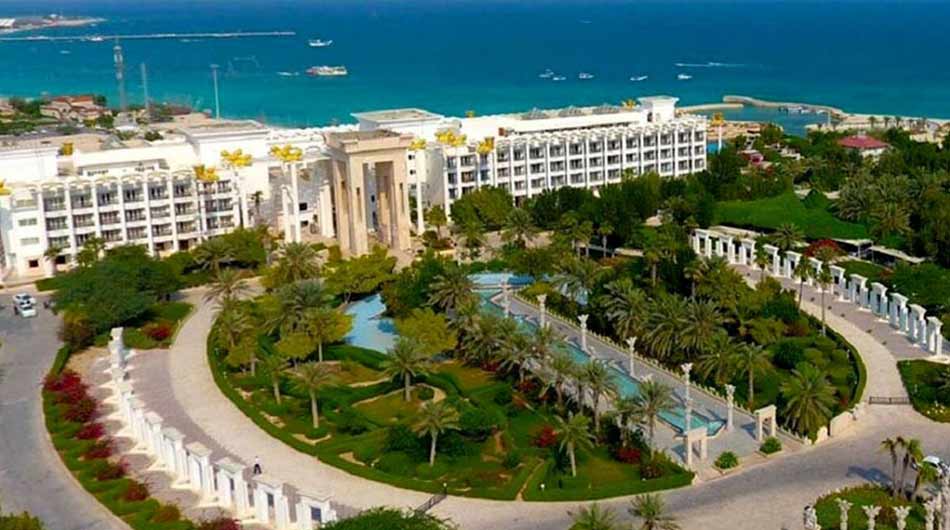
Where to Stay in Iran: Hotels, Traditional Houses and Eco-Lodges
Choosing where to stay is an important part of planning a trip to Iran.
Iran offers much more than conventional hotels. Depending on your destination and travel style, you can stay in an international-style hotel, a small boutique property, a restored historic house, a traditional guesthouse, or an eco-lodge in a rural area.
The right choice depends on more than the number of stars.
Location, access to attractions, transportation, room facilities, atmosphere, privacy, accessibility and the type of experience you want can all make a significant difference.
This guide explains the main types of accommodation in Iran and shows you how to choose the right place to stay in some of the country’s most popular destinations.
Travel note: Accommodation availability, operating conditions, prices and booking procedures can change. Confirm the current status and details of your accommodation before your trip, especially during busy travel periods or periods of disruption.
What Types of Accommodation Are Available in Iran?
Iran has a diverse accommodation sector.
The official Visit Iran tourism platform lists several categories, including hotels, hotel apartments, eco-lodges, guesthouses, traditional accommodation, tourist camps, resorts and other tourism facilities.
For international travelers, the most useful categories to understand are:
- Hotels
- Boutique hotels
- Traditional houses and traditional hotels
- Eco-lodges
- Guesthouses
- Hotel apartments
- Resorts and specialized accommodation
Each type offers a different travel experience.
1. Hotels in Iran
Hotels are usually the easiest choice for travelers who prioritize familiar facilities and predictable services.
Major Iranian cities have a wide range of hotels, from large luxury properties to smaller budget hotels.
Tehran, for example, has numerous hotels and guesthouses serving different budgets and travel needs.
Hotels are a good choice if you want:
- Private rooms and bathrooms
- Reception services
- Breakfast
- Housekeeping
- Air conditioning or heating
- Luggage storage
- Restaurant or room service
- Easier arrangements for transfers
Larger hotels can also be particularly convenient if you are arriving in Iran for the first time or traveling with luggage between several cities.
Luxury hotels
Luxury properties can be useful for travelers who want:
- Larger rooms
- Multiple dining options
- Business facilities
- Fitness or wellness facilities
- Higher levels of on-site service
- Familiar hotel infrastructure
However, a higher hotel category does not automatically mean that the property is the best choice for your itinerary.
A centrally located smaller hotel may sometimes be more convenient than a large luxury property located farther from the places you want to visit.
2. Boutique Hotels in Iran
Boutique hotels offer a different experience from large conventional hotels.
Many are smaller properties with an emphasis on architecture, design, atmosphere and local character.
They can be particularly interesting in historic cities where traditional buildings have been restored and converted into accommodation.
Instead of staying in a modern high-rise building, you may sleep in a historic courtyard house with traditional architectural details.
This can make the accommodation itself part of your Iranian travel experience.
Boutique hotels are ideal for:
- Couples
- Culture-focused travelers
- Photographers
- Architecture enthusiasts
- Travelers looking for a more personal atmosphere
- Visitors who prefer smaller properties
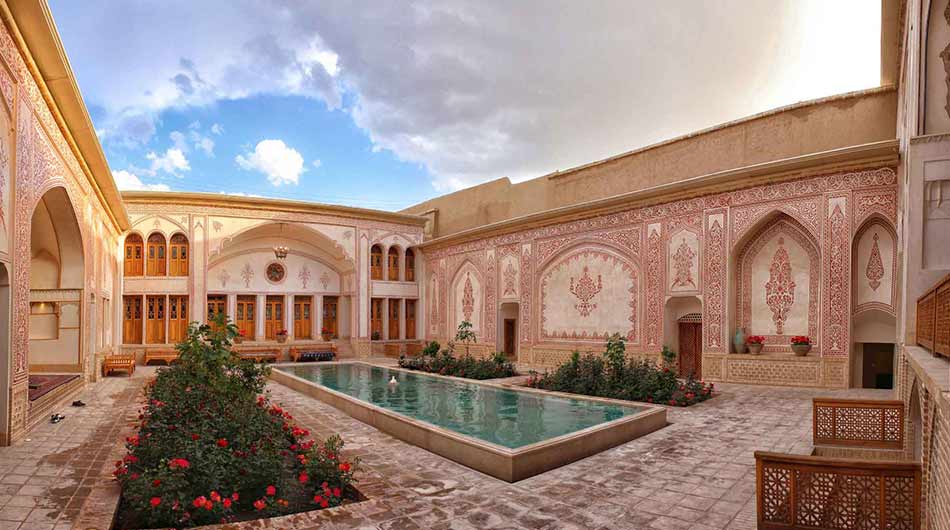
3. Traditional Houses and Historic Hotels
One of the most distinctive accommodation experiences in Iran is staying in a restored traditional house.
This is particularly common in historic destinations such as Kashan and Yazd.
Traditional Iranian houses often revolve around an interior courtyard and may include features such as:
- Courtyard gardens
- Traditional decorative details
- Brickwork
- Wooden doors
- Verandas
- Historic rooms
- Traditional Persian architectural elements
IranParadise has previously highlighted the restored historic houses of Kashan, some of which have been converted into accommodation for visitors.
Why stay in a traditional house?
Because you are not simply booking a room.
You are experiencing a style of architecture that reflects how people lived in historic Iranian cities.
For many travelers, this can be one of the most memorable parts of visiting Iran.
But traditional accommodation is not always luxurious
This is important.
A beautifully restored historic property may have smaller rooms, fewer modern facilities or a less standardized service model than a large hotel.
Before booking, check:
- Private or shared bathroom
- Elevator availability
- Air conditioning
- Heating
- Room size
- Accessibility
- Wi-Fi
- Breakfast
- Stair access
The character of the property can be its greatest strength, but it may also mean sacrificing some modern conveniences.
4. Eco-Lodges in Iran
Eco-lodges are particularly interesting for travelers who want to experience rural Iran, local architecture, nature and regional culture.
The official Visit Iran tourism platform identifies eco-lodges as a distinct accommodation category and lists them across many Iranian provinces.
In some regions, eco-lodges operate in traditional buildings or village houses and offer locally prepared food.
For example, Yazd Province has a range of eco-lodges and traditional accommodations, while Isfahan Province also offers eco-lodges and local traditional houses outside the capital.
Eco-lodges can be especially interesting in:
- Desert regions
- Rural villages
- Mountain areas
- Southern Iran
- Qeshm Island
- Northern Iran
- Areas surrounding historic towns
What makes an eco-lodge different?
The experience may focus less on hotel-style services and more on:
- Local food
- Traditional architecture
- Rural life
- Nature
- Regional culture
- Small-scale hospitality
If your goal is to understand a particular region rather than simply use it as a place to sleep, an eco-lodge can be a memorable option.
5. Guesthouses
Guesthouses are generally smaller than conventional hotels and may provide a more informal atmosphere.
They can be a practical choice for:
- Budget-conscious travelers
- Solo travelers
- Longer stays
- Travelers interested in meeting other visitors
- Visitors looking for a local atmosphere
Facilities vary considerably, so it is important to check exactly what is included before booking.
A guesthouse in a major city may feel very different from a family-run guesthouse in a small village.
6. Hotel Apartments
Hotel apartments can be useful for travelers who prefer more space or are staying for several nights.
Depending on the property, they may include:
- Kitchen facilities
- Living areas
- Separate bedrooms
- Larger rooms
- Laundry facilities
They can be particularly practical for families or travelers planning a longer stay in one city.
However, facilities vary from property to property, so check the room description carefully before booking.
Where Should You Stay in Iran?
The best accommodation depends heavily on your destination.
Here is a simple overview for some of the country’s most popular tourist cities.
| Destination | Accommodation Experience to Consider |
|---|---|
| Tehran | Modern hotels, luxury hotels, guesthouses |
| Kashan | Traditional houses, boutique hotels |
| Isfahan | Hotels, boutique properties, traditional accommodation |
| Yazd | Traditional hotels, historic houses, eco-lodges |
| Shiraz | Hotels, boutique accommodation, traditional houses |
| Qeshm | Hotels, guesthouses, village eco-lodges |
| Northern Iran | Hotels, villas, rural accommodation, eco-lodges |
| Desert regions | Eco-lodges and desert camps |
This is not a ranking. It is simply a way to understand how accommodation types can complement the character of each destination.
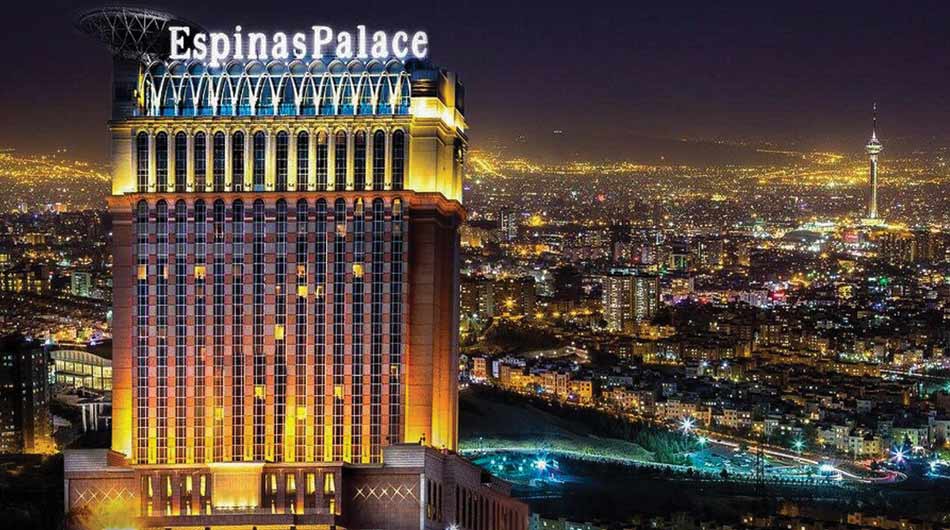
Where to Stay in Tehran
Tehran is a huge metropolitan city, so location matters enormously.
If you are staying only one or two nights, choose accommodation based on the places you actually plan to visit rather than simply choosing a hotel because it has a high category.
Depending on your itinerary, you may want convenient access to:
- Museums
- Golestan Palace
- Grand Bazaar
- Contemporary cultural attractions
- Northern Tehran
- Business districts
- Airports
- Railway stations
Tehran offers a large selection of hotels and guesthouses at different price levels.
Tehran accommodation tip
If you have an early domestic flight or international departure, consider the location and transfer time to the relevant airport.
Remember that Tehran has more than one airport serving different types of flights, so your airport should be confirmed before choosing accommodation based on airport proximity.
Where to Stay in Kashan
Kashan is one of the destinations where accommodation can become part of the sightseeing experience.
The city is famous for its historic houses, and some restored traditional properties now welcome travelers.
Staying in or near the historic area can make it easier to explore attractions such as:
- Traditional houses
- Kashan Bazaar
- Agha Bozorg Mosque
- Historic bathhouses
- Traditional gardens
- The surrounding desert region
For a cultural trip, a traditional guesthouse or historic boutique property can provide a very different experience from a conventional modern hotel.
Where to Stay in Isfahan
Isfahan has a well-developed tourism infrastructure with conventional hotels as well as eco-lodges and traditional accommodation.
The official Visit Iran tourism guide describes a range of hotels in Isfahan and also notes traditional and eco-lodge accommodation in the province.
For a first visit, consider how close your accommodation is to the areas you plan to explore.
Depending on your itinerary, you may want convenient access to:
- Naqsh-e Jahan Square
- Imam Mosque
- Sheikh Lotfollah Mosque
- Ali Qapu Palace
- Si-o-se-pol
- Khaju Bridge
- Isfahan Bazaar
- Jameh Mosque
A central location can reduce the amount of time spent traveling between attractions.
Where to Stay in Yazd
Yazd is one of the best destinations in Iran for travelers interested in traditional architecture.
The city and province offer conventional hotels as well as historic and traditional accommodation and eco-lodges.
A traditional property in or around the historic area can allow you to experience features associated with Yazd’s architectural heritage.
Depending on your preferences, look for accommodation close to:
- Yazd Old Town
- Jameh Mosque
- Amir Chakhmaq Square
- Traditional bazaars
- Historic houses
- Zoroastrian heritage sites
For travelers interested in architecture and culture, the atmosphere of the property can be almost as important as its room facilities.
Where to Stay in Shiraz
Shiraz has accommodation ranging from large modern hotels to smaller properties.
It is also an important base for exploring major archaeological sites outside the city.
When selecting a hotel, consider whether your itinerary includes:
- Persepolis
- Pasargadae
- Naqsh-e Rostam
- Nasir al-Mulk Mosque
- Eram Garden
- Hafez Tomb
- Vakil Bazaar
If you plan to make several excursions outside Shiraz, transportation arrangements can be just as important as the hotel itself.
A private transfer or driver can sometimes make a multi-stop sightseeing day much more convenient.
Where to Stay in Qeshm and Southern Iran
Southern Iran offers a different accommodation experience from the classic central-Iran route.
Qeshm Island, Hormuz and other parts of Hormozgan offer hotels, guesthouses and eco-lodges.
The official tourism guide specifically highlights eco-lodges on Qeshm and nearby islands as opportunities to experience local life.
If you are visiting the islands for nature and local culture, consider staying in or near the communities you want to explore rather than automatically choosing the largest hotel available.
Traditional Accommodation vs Modern Hotel
Which should you choose?
The answer depends on what you value most.
| If you prioritize… | Consider… |
|---|---|
| Modern facilities | Conventional hotel |
| Large rooms | Hotel or hotel apartment |
| Architecture and atmosphere | Traditional house |
| Local experience | Eco-lodge or guesthouse |
| Business facilities | Larger hotel |
| Rural experience | Eco-lodge |
| Privacy and familiar services | Hotel |
| Cultural immersion | Boutique or traditional property |
There is no universal winner.
For many travelers, the most interesting itinerary combines both.
For example, you might stay in a modern hotel in Tehran, a traditional house in Kashan, a historic hotel in Yazd and a conventional hotel in Shiraz.
What Should You Check Before Booking?
Accommodation descriptions can look impressive online, but a few practical details can make a major difference.
Before confirming your room, check:
1. Location
Look at the actual location on a map.
A hotel described as “near the city center” may still require transportation to the attractions you want to visit.
2. Private Bathroom
Do not assume every traditional property or guesthouse has an en-suite bathroom.
3. Air Conditioning and Heating
Iran has very different climates.
A room that is comfortable in spring may have very different requirements during summer or winter.
4. Elevator and Stairs
Historic buildings may have several levels but no elevator.
This matters particularly if you have heavy luggage or mobility limitations.
5. Breakfast
Check whether breakfast is included and what type of breakfast is provided.
Traditional properties may offer a more local breakfast experience.
6. Wi-Fi
Internet availability and performance can vary.
Because connectivity conditions in Iran can change, do not assume that accommodation Wi-Fi will always provide reliable access to every online service you use at home.
7. Payment and Booking
For international travelers, payment and booking procedures can require additional planning.
Confirm the accepted payment method and booking conditions before arrival.
What Is a Good Length of Stay?
Accommodation planning should follow your itinerary rather than the other way around.
For a classic first trip, travelers may spend several nights in each major destination, depending on the total length of the journey.
A simple example could look like:
Tehran: 2–3 nights
Kashan: 1–2 nights
Isfahan: 2–3 nights
Yazd: 1–2 nights
Shiraz: 2–3 nights
This is only an example, not a fixed itinerary.
If you prefer slower travel, adding nights to fewer destinations can be more enjoyable than changing hotels every day.
Should You Stay in the City Center?
Usually, location should be evaluated based on your personal itinerary.
City-center accommodation can offer:
- Easier access to attractions
- More restaurants and shops nearby
- Less daily transportation
- More opportunities to explore on foot
Accommodation outside the center can offer:
- Quieter surroundings
- Larger properties
- More space
- Access to different neighborhoods
- Sometimes easier parking
The “best” location is therefore the one that fits your plans.
Accommodation for Different Types of Travelers
For First-Time Visitors
A conventional hotel in a convenient location can make your first few nights easier.
You can then add a traditional property later in the trip once you are familiar with the country.
For Couples
Boutique and traditional hotels can provide a more intimate and atmospheric experience.
For Families
Look for:
- Larger rooms
- Hotel apartments
- Connecting rooms
- Elevators
- Convenient transportation
- Family-friendly facilities
For Solo Travelers
Guesthouses and smaller properties can offer a more social atmosphere, while conventional hotels provide more standardized services.
For Luxury Travelers
Look at the overall experience rather than the star rating alone.
Location, service, restaurant quality, room size, facilities and transportation arrangements all matter.
For Nature Travelers
Eco-lodges, rural houses and locally operated accommodation can bring you closer to the landscape and local communities.
Staying in Iran for Medical Tourism
Accommodation requirements can be different for medical travelers.
If your trip involves medical treatment, location becomes particularly important.
Consider the distance between your accommodation and:
- Hospital or clinic
- Airport
- Pharmacy
- Restaurants
- Transportation
- Follow-up appointments
A luxury hotel far from the medical center may be less practical than a comfortable hotel or serviced accommodation nearby.
IranParadise also provides hotel reservation and transportation services, which can be useful when accommodation needs to be coordinated with transfers and a medical travel itinerary.
Booking Accommodation as Part of a Larger Iran Itinerary
One of the easiest ways to make accommodation decisions is to plan the entire route first.
For example:
International arrival → Tehran → Kashan → Isfahan → Yazd → Shiraz → departure
Then decide:
- How many nights in each destination?
- Which attractions are nearby?
- Which transportation method will you use?
- Do you want a modern hotel or traditional experience?
- Where should you prioritize convenience?
- Where would a special accommodation experience add value?
This approach prevents you from choosing hotels in isolation.
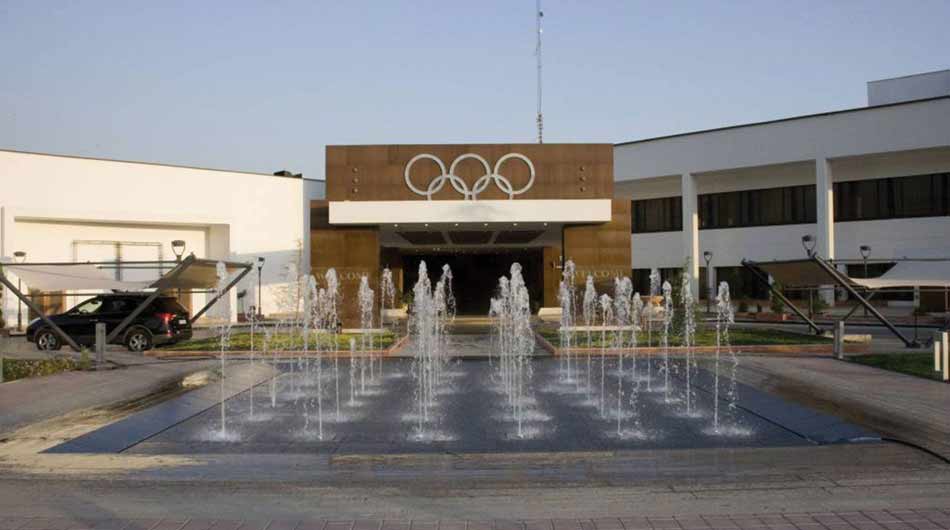
How IranParadise Can Help With Accommodation
IranParadise provides hotel reservation services and works with hotels around Iran to help travelers choose accommodation according to their trip requirements. The company also provides domestic flight bookings, transfers, transportation and tour leaders, allowing accommodation to be planned together with the rest of the itinerary.
This can be particularly useful for travelers planning a multi-city trip.
Instead of arranging every hotel and transfer separately, you can build the accommodation plan around your route, sightseeing schedule and transportation needs.
For a tailor-made journey, the accommodation itself can also become part of the travel experience—for example, combining modern hotels in major cities with traditional properties in historic destinations.
Frequently Asked Questions
What type of accommodation is available in Iran?
Iran offers hotels, boutique properties, hotel apartments, guesthouses, eco-lodges, traditional accommodation, tourist camps and other tourism facilities.
Are there luxury hotels in Iran?
Yes. Major cities such as Tehran, Isfahan and Shiraz have larger upscale hotels, alongside many other accommodation categories.
Can I stay in a traditional Iranian house?
Yes. Restored historic and traditional houses operate as accommodation in several tourist destinations, particularly in cities such as Kashan and Yazd.
Are eco-lodges available in Iran?
Yes. Eco-lodges are available in many Iranian provinces, including rural, desert, mountainous and island destinations.
Where should I stay in Iran for a first trip?
For a classic cultural itinerary, many travelers choose accommodation in Tehran, Kashan, Isfahan, Yazd and Shiraz. The specific property should be selected according to location, itinerary and preferred accommodation style.
Is it better to stay in a hotel or traditional house?
It depends on your priorities. Hotels generally provide more standardized facilities, while traditional properties can offer a stronger cultural and architectural experience.
What should I consider when choosing a hotel in Iran?
Consider location, room facilities, heating and cooling, bathroom arrangements, Wi-Fi, breakfast, accessibility, transportation and booking/payment conditions.
Can IranParadise arrange hotels and transportation together?
Yes. IranParadise provides hotel reservation, domestic flight, transportation and transfer services, allowing these elements to be coordinated as part of a wider itinerary.
Quick Facts: Accommodation in Iran
Best for modern facilities: Hotels
Best for architecture: Traditional houses
Best for local experiences: Eco-lodges
Best for longer stays: Hotel apartments
Best for a social atmosphere: Guesthouses
Best strategy: Choose accommodation according to your route, not only its rating
Important: Always confirm current availability, facilities and booking conditions before arrival
Where you stay can shape how you experience Iran.
A modern hotel can provide comfort and convenience after a long travel day. A traditional house can introduce you to Persian architecture. An eco-lodge can bring you closer to rural life and nature.
For many visitors, the most rewarding approach is not choosing one accommodation style for the entire trip.
Instead, mix them.
Stay in a comfortable hotel in Tehran, experience a traditional house in Kashan or Yazd, and consider an eco-lodge when you travel into rural or natural areas.
The best accommodation is ultimately the one that fits your itinerary, your priorities and the kind of experience you want to take home from Iran.
Tags:accommodation in Isfahan, accommodation in Kashan, accommodation in Shiraz, accommodation in Tehran, accommodation in Yazd, Adventure holidays, Best time to travel to iran, best tour operator iran, boutique hotels Iran, Cultural sites of Iran, cultural tourism Iran, Custom Iran tours, Economy of Travel, hotels in Iran, how to get from IKA to Tehran, Iran accommodation, Iran adventure tours, iran attractions, Iran cultural tours, iran destinations, Iran eco lodges, Iran guesthouses, iran Solo trip, iran tour, Iran tour packages, Iran tourism plan, iran tourist attractions, Iran tours, Iran travel agency, Iran travel requirements, Iran Travel Tips, iranparadise, Iranparadise airport transfer, Iranparadise tourism, Iranparadise tourism company, Luxury tours in Iran, must-visit Iran, Private guides in Iran, Private tours in Iran, traditional hotels in Iran, travel guide Iran, Travel to Iran with Iranparadise, where to stay in Iran, درنا گشت
Post Discussion