

Getting Around Iran: Trains, Buses, Domestic Flights and Private Drivers
 Getting Around Iran: Trains, Buses, Domestic Flights and Private Drivers
 Getting Around Iran: Trains, Buses, Domestic Flights and Private Drivers
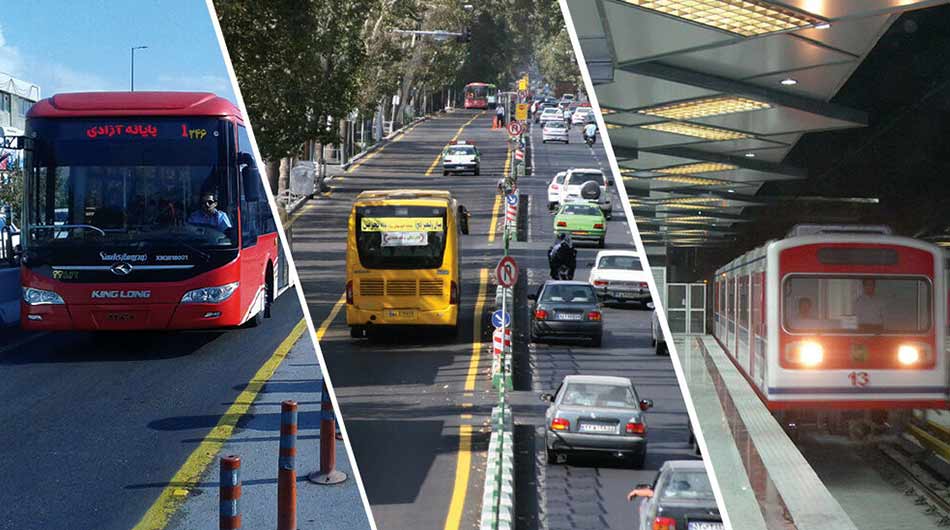
Iran is a large country, and seeing more than one destination often means covering significant distances. Fortunately, travelers have several ways to move between Iranian cities, from comfortable intercity trains and long-distance buses to domestic flights and private cars with drivers.
The best option depends on your itinerary, budget, available time and the kind of experience you want.
For example, a train can turn a long journey into a relaxed overnight experience, while a domestic flight can save hours when two destinations are far apart. A private car with a driver can be particularly useful when your route includes smaller towns, archaeological sites or scenic areas that are difficult to reach by public transportation.
This guide explains how transportation in Iran works and helps you decide which option makes the most sense for your trip.
Travel note: Transportation schedules and operating conditions in Iran can change, sometimes at short notice. Always confirm your train, bus or flight before departure, especially when traveling during holidays or periods of disruption.
How Easy Is It to Travel Around Iran?
For travelers visiting the main tourist destinations, Iran has several intercity transportation options.
The country’s tourism infrastructure includes road, rail and air connections between many major cities. Iran’s official tourism portal also lists transportation facilities alongside accommodation and tourism services across the country.
The four options most relevant to international visitors are:
- Train – comfortable and interesting for longer journeys
- Intercity bus – affordable and widely available
- Domestic flight – useful for long distances
- Private car and driver – flexible and convenient for customized itineraries
There are also taxis, ride-hailing services and public transportation within cities, but those are generally used for getting around individual destinations rather than traveling across Iran.
Iran Transportation at a Glance
| Transportation | Best For | Main Advantage | Main Limitation |
|---|---|---|---|
| Train | Long-distance journeys | Comfortable and relaxing | Not available on every route |
| VIP Bus | Budget travelers | Affordable and extensive network | Longer journeys |
| Domestic Flight | Long distances | Saves time | Schedules can change |
| Private Car + Driver | Flexible itineraries | Door-to-door travel and stops | Higher cost |
| Taxi / Ride-Hailing | City transportation | Convenient | Mainly useful within cities |
The right combination is often better than relying on one form of transportation for the entire trip.
1. Traveling Around Iran by Train
Train travel is one of the most interesting ways to experience Iran.
The railway connects Tehran with a number of major cities, including destinations such as Mashhad, Yazd, Shiraz and other parts of the country. Tehran Railway Station is one of Iran’s major rail hubs.
IranParadise has also previously covered train travel between major destinations, including Tehran, Mashhad, Isfahan and Yazd.
Why choose the train?
The biggest advantage is that the journey itself can become part of your travel experience.
Instead of spending hours in an airport, travelers can relax, read, sleep or watch the landscape change outside the window.
Depending on the service, Iranian trains can include regular seating or sleeper compartments. Overnight services can be particularly useful because they allow travelers to travel while sleeping rather than losing a full day to transportation.
What are the disadvantages?
The railway does not connect every tourist destination directly.
For example, a journey involving smaller towns, villages or remote archaeological sites may require a combination of train, road transportation and local transfers.
Train schedules can also be less flexible than buses, and popular departures may sell out, particularly during busy travel periods.
Current timetable information should therefore be checked for the exact travel date rather than relying on a general route list.
Train travel is especially useful for:
- Tehran → Mashhad
- Tehran → Yazd
- Tehran → Shiraz
- Tehran → other major railway-connected destinations
- Overnight journeys where you want to save daytime travel time
Tip: If a particular train is important to your itinerary, arrange the ticket as early as practical rather than leaving it until the day of departure.
2. Traveling Around Iran by Intercity Bus
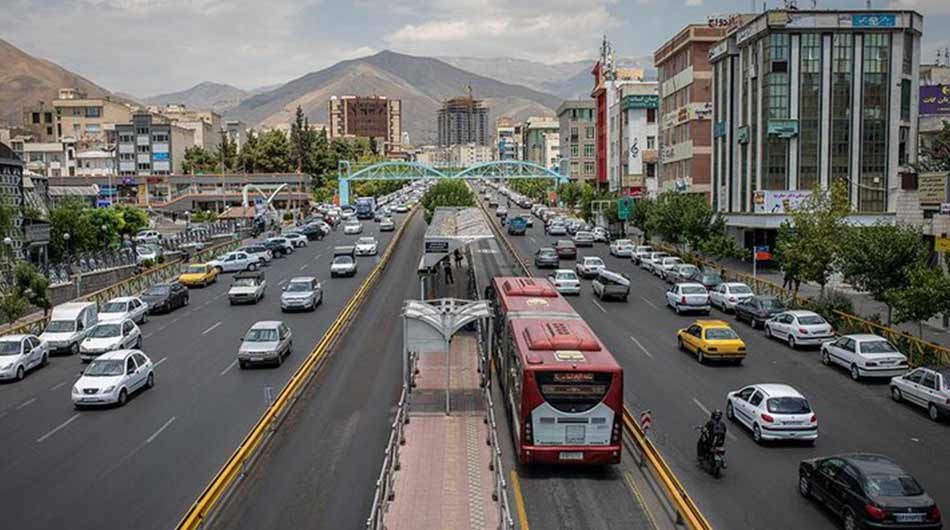
For many travelers, buses are the most flexible way to move between Iranian cities.
Iran has an extensive intercity road network, and buses connect major cities as well as many smaller destinations.
VIP buses are also available on popular routes. These generally provide a more spacious and comfortable experience than ordinary buses.
Why choose a bus?
The biggest advantage is coverage.
There are destinations that are easier to reach by road than by train or airplane. Buses can therefore be particularly useful when your itinerary includes several cities that are not directly connected by rail.
Buses are also generally a practical choice for travelers who want to control transportation costs.
What are the disadvantages?
Long-distance bus journeys can take several hours, and road conditions, traffic and stops can affect the actual travel time.
For very long journeys, a sleeper train or domestic flight may be more comfortable depending on your priorities.
Bus travel is especially useful for:
- Medium-distance journeys
- Budget travel
- Routes without convenient train connections
- Smaller cities and regional destinations
- Travelers who prefer frequent road connections
IranParadise’s existing transportation guidance also notes that intercity buses are a practical way to travel around the country, particularly for travelers trying to manage their transportation budget.
3. Domestic Flights in Iran
Domestic flights are useful when your itinerary covers large distances.
Iran is geographically large, so flying can save considerable travel time compared with traveling by road.
For example, if your itinerary combines cities in different parts of the country, a domestic flight may allow you to spend more time sightseeing rather than sitting on a bus or in a car.
IranParadise provides domestic flight booking as part of its travel services.
When should you consider flying?
Domestic flights make the most sense when:
- The distance between destinations is very long
- Your itinerary is short
- You have several destinations to visit
- You want to reduce overnight or daytime road travel
- The available flight schedule fits your itinerary
An important point about Tehran airports
If your itinerary involves Tehran, pay close attention to the airport code on your ticket.
IKA refers to Imam Khomeini International Airport, while THR refers to Mehrabad Airport, which handles many domestic flights.
These are separate airports, so an international arrival at IKA followed by a domestic flight from THR requires a road transfer between the airports.
This is an easy detail to overlook when planning a tight itinerary.
Flight schedules can change
Domestic aviation conditions in Iran can change, and current schedules should be confirmed directly before traveling to the airport.
Recent travel updates have specifically emphasized that domestic flight operations and schedules can change at short notice.
For this reason, avoid building an itinerary around a very tight connection unless you have enough flexibility.
4. Private Car and Driver in Iran
A private car with a driver can be one of the most useful options for travelers who want flexibility.
Instead of simply traveling from one city to another, you can design the journey around the places you actually want to see.
This is particularly valuable outside the major cities.
Why choose a private driver?
Imagine traveling from Isfahan toward Yazd.
With a fixed public-transport itinerary, you generally travel between the two cities.
With a private vehicle, your route can potentially include additional stops depending on the itinerary, road conditions and available time.
The same principle can be useful around Shiraz, where travelers may want to combine several archaeological sites and nearby attractions in one day.
Private transportation can also be practical for:
- Rural destinations
- Villages
- Desert excursions
- Archaeological sites
- Nature destinations
- Multi-stop journeys
- Families or small groups
- Travelers carrying substantial luggage
IranParadise offers transportation and transfer services, including vehicles with drivers, and describes its transportation service as suitable for daily and longer-term travel requirements.
Train vs Bus vs Flight vs Private Driver
There is no single transportation method that is best for every journey.
Instead, think about what matters most for each individual leg of your itinerary.
Choose a train if:
- You enjoy slower, more relaxed travel
- Your destination is well connected by rail
- You are comfortable with a longer journey
- You like the idea of an overnight journey
- You want to experience Iran beyond the airport
Choose a bus if:
- You are traveling on a tighter budget
- There is no convenient train connection
- You are traveling a medium distance
- You want more departure options
Choose a domestic flight if:
- You are traveling a very long distance
- Your itinerary is short
- Saving time is more important than seeing the landscape
- A suitable flight is operating on your travel date
Choose a private car and driver if:
- You want maximum flexibility
- Your route includes several stops
- You are visiting villages or remote attractions
- You want door-to-door transportation
- You are traveling as a family or small group
The Best Strategy: Combine Different Types of Transportation
 The Best Strategy: Combine Different Types of Transportation
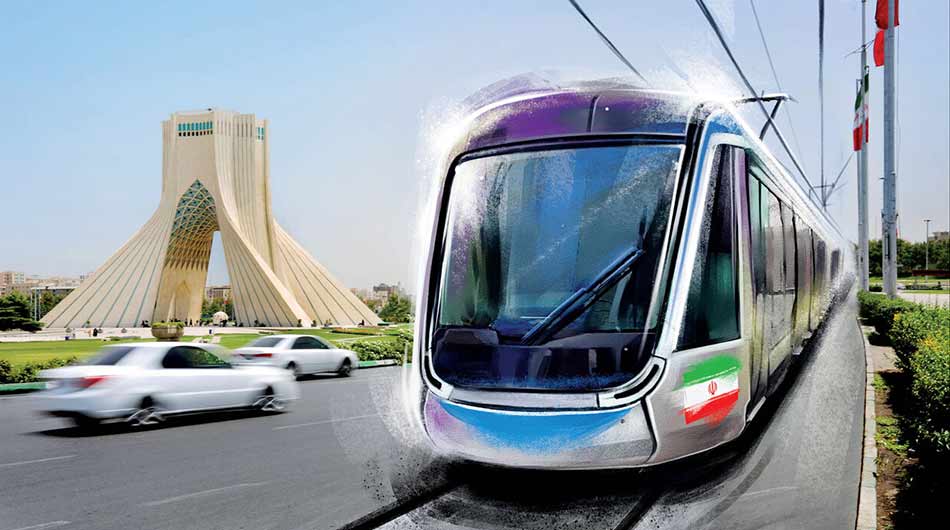
You do not need to choose just one method for your entire trip.
In fact, combining transportation types can create a much more efficient itinerary.
For example:
Tehran → Shiraz: Domestic flight
Shiraz → Persepolis and Pasargadae: Private car and driver
Shiraz → Yazd: Bus or private transfer
Yazd → Tehran: Train
Tehran → local sightseeing: Metro + taxi/ride-hailing
The exact combination depends on the destinations and dates.
This approach allows you to use each transportation method where it makes the most sense instead of forcing the entire trip into one system.
Traveling Between Iran’s Major Tourist Cities
For a classic first-time Iran itinerary, travelers often combine destinations such as:
- Tehran
- Kashan
- Isfahan
- Yazd
- Shiraz
Rather than asking, “Which transportation method is best in Iran?”, consider asking:
Which transportation method is best for this particular route?
For example:
Tehran
Tehran is the country’s major transportation hub, with rail, road and air connections.
Kashan
Kashan is relatively close to Tehran and can be incorporated into a road itinerary between Tehran and central Iran.
Isfahan
Isfahan can be reached by road and rail, depending on the current schedule.
Yazd
Yazd is well suited to a combination of train, bus or private road transportation depending on your itinerary.
Shiraz
Shiraz is accessible by road, rail and domestic flights, making it relatively easy to combine with other major destinations.
The most efficient option depends on how many days you have and which attractions you want to visit along the way.
What About Shared Taxis?
Shared taxis, sometimes called savari, are another form of transportation in Iran.
They can connect towns and cities on certain routes and may be faster than a conventional bus.
However, they are generally less straightforward for international visitors because routes, departure points and payment practices may not be as intuitive as a pre-booked bus or private transfer.
For a first trip, travelers who do not speak Persian may find pre-arranged transportation easier, particularly when carrying luggage or traveling between unfamiliar locations.
Getting Around Inside Iranian Cities
Intercity transportation is only part of the equation.
Once you arrive at your destination, you will normally use some combination of:
- Metro
- City buses
- Taxis
- Ride-hailing services
- Walking
- Private transfers
Tehran has an extensive urban transportation network, while other major cities also have taxis and local transportation.
For airport arrivals and departures, pre-arranged transfers can be particularly convenient, especially if you have luggage or arrive late.
IranParadise provides airport and other transfer services as part of its travel services.
Should You Rent a Car and Drive Yourself?
Self-driving is a different question from hiring a private car with a driver.
Although independent driving may appeal to experienced travelers, it requires considerably more planning.
You need to consider:
- Driving requirements for foreign visitors
- Insurance
- Rental conditions
- Navigation
- Language barriers
- Local driving practices
- Parking
- Long distances
- Road conditions
For travelers visiting Iran for the first time, a private driver can provide much of the flexibility of road travel without requiring the visitor to handle every part of the driving and navigation themselves.
How to Book Transportation in Iran
Transportation booking can be different from what international travelers are accustomed to in Europe or North America.
Some services can be booked online, while others may be easier to arrange through local agencies, hotels or travel providers.
This can become particularly important for foreign visitors because payment methods, language, ticket availability and booking systems may create additional complications.
Before booking, check:
- Departure date
- Departure time
- Departure station or airport
- Arrival location
- Passenger name and passport details
- Luggage requirements
- Cancellation or change conditions
- Current operating status
For flights, always check the airport code rather than relying only on the city name.
For trains and buses, confirm the station or terminal because large cities may have multiple transportation facilities.
Transportation During Iranian Holidays
Travel demand can increase significantly during major Iranian holidays and popular travel periods.
This can affect:
- Train availability
- Bus availability
- Domestic flights
- Hotel rooms
- Private drivers
- Road traffic
If your trip coincides with a busy holiday period, booking important transportation segments earlier is sensible.
Do not assume that a seat will always be available on the day you want to travel.
Practical Tips for International Travelers
1. Do not underestimate distances
Iran is much larger than many first-time visitors expect.
Trying to visit too many destinations can turn a two-week vacation into a series of transportation days.
2. Leave some flexibility
If your itinerary includes several domestic flights or long road journeys, avoid scheduling important activities immediately after arrival.
3. Keep your transportation documents accessible
Keep digital and, where practical, printed copies of:
- Tickets
- Passport information
- Hotel details
- Driver contact information
- Emergency contacts
4. Confirm important journeys shortly before departure
Schedules can change, especially for flights and other time-sensitive services.
5. Consider the entire door-to-door journey
A flight may be short in the air but require transportation to the airport, airport waiting time, check-in and transportation from the destination airport.
A train or private car may take longer on paper but provide a simpler door-to-door experience.
6. Use a combination of transportation methods
A good itinerary often uses flights for very long distances, trains or buses for medium distances, and private vehicles for sightseeing routes.
How IranParadise Can Help With Transportation
Planning transportation becomes much easier when it is integrated into the rest of your itinerary.
IranParadise provides transportation-related services including domestic flight bookings, transfers and vehicles with drivers. The company can also arrange tailor-made travel programs around a visitor’s preferred destinations and schedule.
For travelers visiting several regions of Iran, this can be particularly useful because transportation does not have to be planned separately from accommodation, sightseeing and guides.
A tailor-made itinerary can combine different transportation methods according to the route rather than using the same method for every journey.
Frequently Asked Questions
What is the best way to travel around Iran?
There is no single best option for every route. Trains, buses, domestic flights and private cars each have different advantages. The best choice depends on distance, available time, budget and your itinerary.
Is it easy to travel between cities in Iran?
Major cities are connected by road, rail and/or air, but the most convenient option varies by route. Smaller towns and rural attractions may require road transportation or a private transfer.
Are trains available between major tourist cities?
Yes, rail services connect a number of major Iranian cities, although routes and schedules vary. Always check the current timetable for your travel date.
Are buses comfortable in Iran?
Intercity buses are widely used, and VIP services are available on many routes. Comfort varies by operator, vehicle and route.
Are domestic flights available in Iran?
Domestic flights operate between a number of Iranian cities, but schedules and operating conditions can change. Travelers should confirm their flight before departure.
Is hiring a private driver worth considering?
A private driver can be particularly useful for multi-stop journeys, rural destinations, archaeological sites and travelers who want greater flexibility.
Can I combine trains, buses and flights on one trip?
Absolutely. Combining transportation methods is often the most practical way to explore a large country such as Iran.
Do I need a private driver for my entire trip?
Not necessarily. Many travelers can use trains, buses or flights between major cities and hire a private driver only for specific sightseeing days or remote destinations.
Quick Facts: Getting Around Iran
Best for long distances: Domestic flights
Best for relaxed travel: Train
Best for budget travel: Intercity bus
Best for flexibility: Private car and driver
Best for rural destinations: Private transportation
Best strategy for a multi-city trip: Combine different transportation methods
Important: Confirm schedules and operating conditions before departure
Traveling around Iran does not have to be complicated.
The key is understanding that different transportation methods serve different purposes.
Use flights when distance matters, trains when you want a more relaxed journey, buses when you want practical and economical intercity transportation, and private cars with drivers when flexibility and access to less-connected destinations are important.
For many travelers, the most enjoyable itinerary is a combination of all four.
And because transportation schedules, availability and operating conditions can change, especially in periods of disruption, it is worth confirming each important journey before departure.
With the right combination of transportation, you can spend less time worrying about how to get from one place to another—and more time experiencing Iran’s cities, landscapes, archaeological sites and local culture.
Tags:domestic flights in Iran, Getting Around Iran, Iran buses, Iran trains, Iran transportation, Iran travel transport, iranparadise, private driver in Iran, transportation in Iran, traveling around Iran, درنا گشت
Post Discussion