

The Seven Fortifications of Alamut: A Guide to Iran’s UNESCO Heritage Site
The Seven Fortifications of Alamut: A Guide to Iran’s UNESCO Heritage Site
When people hear the name Alamut, they usually think of one dramatic fortress rising above the mountains of northern Iran.
But Alamut is much more than a single castle.
In 2026, Alamūt Castle and Related Fortifications were inscribed on the UNESCO World Heritage List as a serial cultural property consisting of seven castles and fortifications distributed throughout the Alamut Valley in Qazvin Province.
At the center of this historic network stands Alamut Castle, the headquarters of the Nizari Ismaili state founded by Hassan Sabbah in 1090. Around it, six associated fortifications were strategically positioned across the rugged landscape of the Alborz Mountains. Together, they formed a coordinated defensive system that supported political, military, cultural, and intellectual life for generations.
The seven components are:
- Alamut Castle
- Lambesar Castle
- Navizarshah Castle
- Shams Kelayeh Fortification
- Qostinlar Fortification
- Shirkouh Fortification
- Ilan Fortification
Understanding these seven sites helps reveal why UNESCO recognized Alamut not simply as a famous castle, but as an entire historical landscape.
What Are the Seven Fortifications of Alamut?
The UNESCO World Heritage property Alamūt Castle and Related Fortifications is a serial property.
This means that several geographically separate sites are recognized together because they share a strong historical and cultural relationship.
In the case of Alamut, the seven component sites are distributed across the Alamut Valley and together demonstrate the organization of the Nizari Ismaili fortified landscape.
UNESCO describes the network as strategically positioned throughout the Alborz Mountains and emphasizes that the fortifications worked together as a coordinated defensive system.
The seven sites are not identical.
Some were major castles, while others were smaller fortifications occupying strategically important positions.
Their value lies partly in understanding how they worked together.
1. Alamut Castle
The Center of the Alamut Network
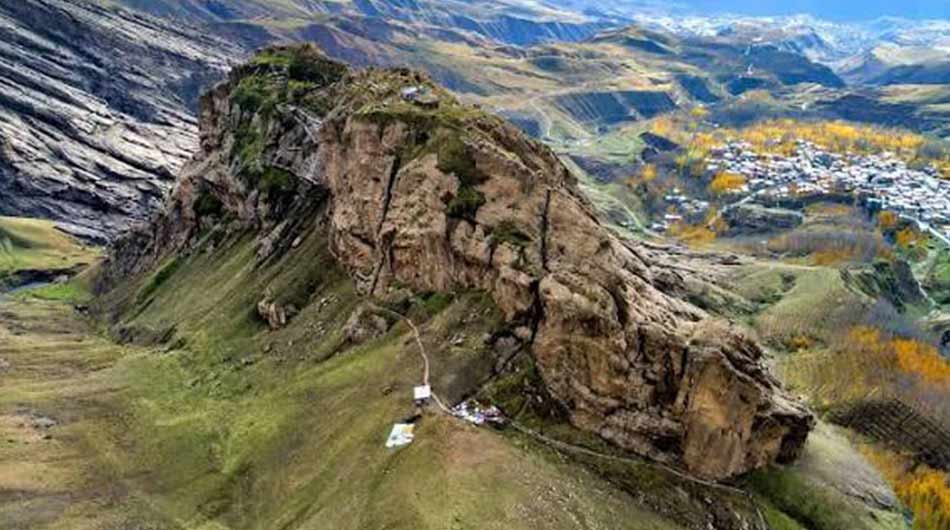
Alamut Castle is the most famous and historically significant component of the UNESCO property.
The fortress stands on a steep rocky outcrop in the central Alborz Mountains, approximately 2,163 meters above sea level and around 220 meters above the surrounding landscape.
Its extraordinary position provided a natural defensive advantage.
The castle is located approximately two kilometers northeast of the village of Gazor Khan, overlooking the surrounding landscape.
But Alamut’s importance was not simply geographical.
From the late 11th century, it became the headquarters of the Nizari Ismaili state, after Hassan Sabbah captured the fortress in 1090.
From Alamut, the Nizari Ismailis developed a wider network of fortified settlements throughout the mountains.
More Than a Military Fortress
Alamut was also a political, intellectual, and cultural center.
UNESCO describes it as the political, military, and intellectual center of the Nizari Ismailis from the late 11th century onward.
The surviving archaeological remains include evidence of defensive structures and systems related to water and food supply.
Today, the castle is largely an archaeological ruin, but its dramatic location still communicates the strategic importance of the site.
2. Lambesar Castle
One of the Major Strongholds
Lambesar Castle was another important component of the Nizari Ismaili network.
Located within the mountainous landscape of the Alamut region, Lambesar occupied a strategically important position and functioned as one of the major fortified centers associated with the Alamut state.
Its inclusion in the UNESCO property demonstrates that the history of Alamut cannot be understood through the central castle alone.
Lambesar was part of the wider system.
Why Lambesar Matters
The existence of major fortifications such as Lambesar shows how the Nizari Ismailis distributed defensive capabilities throughout the mountainous landscape.
Rather than concentrating everything in a single fortress, they developed a network that could support communication, defense, administration, and community life across the region.
UNESCO identifies Lambesar as one of the six associated fortifications that, together with Alamut Castle, form the serial World Heritage property.
3. Navizarshah Castle
A Strategic Mountain Fortress
The third component of the UNESCO property is Navizarshah Castle.
Like the other associated sites, Navizarshah occupied a strategic location within the Alamut landscape.
Its importance comes not only from the surviving archaeological remains but from its role within the broader network.
The mountains of Alamut are characterized by steep ridges, valleys, and difficult approaches.
Strategically positioned fortifications could therefore control movement through the landscape and create layers of defense around important settlements and routes.
Navizarshah contributes to our understanding of how this system operated as a connected network rather than as a collection of unrelated castles.
4. Shams Kelaye h Fortification
A Smaller Element of a Larger System
Shams Kelayeh Fortification represents another component of the UNESCO property.
Unlike the famous central castle, sites such as Shams Kelayeh are less familiar to international travelers.
That is precisely what makes the UNESCO designation important.
It brings attention to a much wider archaeological landscape and encourages visitors and researchers to look beyond the best-known ruins.
The fortification formed part of the defensive organization of the Alamut region, taking advantage of the natural geography of the Alborz Mountains.
Together with the other components, it helps illustrate how the Nizari Ismailis adapted their defensive strategy to the mountainous environment.
5. Qostinlar Fortification
Another Link in the Defensive Network
Qostinlar Fortification is another of the lesser-known components of the Alamut World Heritage property.
Its importance becomes clearer when viewed within the entire landscape.
The Nizari Ismaili strongholds were not designed simply as isolated castles.
They were distributed strategically across the region.
This allowed the community to maintain a presence across difficult terrain and to use the mountains as part of a broader defensive strategy.
Qostinlar therefore contributes to the overall story of the Alamut network and its adaptation to the geography of the Alborz Mountains.
6. Shirkouh Fortification
Defense in the Alborz Landscape
The sixth component is Shirkouh Fortification.
Its inclusion in the UNESCO property emphasizes the geographical scale of the Alamut network.
When viewed from the perspective of a single castle, the Alamut story can seem relatively simple.
When the six associated fortifications are added, a much more complex picture emerges.
The fortifications were positioned throughout a rugged landscape in which mountains, valleys, cliffs, agricultural areas, and water resources all influenced settlement and defense.
UNESCO’s evaluation describes the seven component sites as forming a visually and structurally connected fortified system within this natural defensive territory.
7. Ilan Fortification
Completing the Seven-Site Network
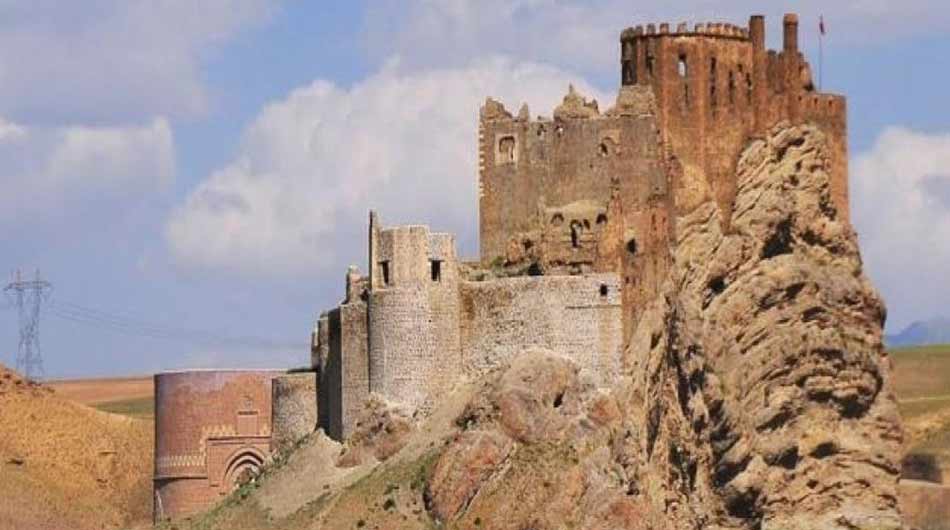
The seventh and final component is Ilan Fortification.
Although it is less famous than Alamut Castle, Ilan is important precisely because it helps complete the picture of the wider network.
Together, the seven components show that the historical Alamut landscape was not centered on a single isolated stronghold.
Instead, it consisted of multiple strategically positioned sites connected by geography, political organization, and shared cultural history.
UNESCO therefore recognizes the seven sites together as one serial World Heritage property.
Why Were So Many Fortifications Needed?
One of the most interesting questions about Alamut is why the Nizari Ismailis needed such a large network of fortifications.
The answer lies partly in geography and politics.
The Nizari Ismailis existed in a politically challenging environment surrounded by larger and more powerful states.
The Alborz Mountains provided a natural defensive advantage.
Instead of relying on a single fortress, the Nizari Ismailis developed a network that allowed them to maintain fortified positions across the region.
The resulting system combined:
- Natural mountain defenses
- Fortified settlements
- Strategic observation points
- Agricultural resources
- Water-management systems
- Food storage
- Administrative centers
- Religious and intellectual activity
UNESCO emphasizes that the network served as both a refuge and a cultural and scholarly center for the Nizari community.
The Mountains Were Part of the Defense
To understand the Alamut fortifications, it is essential to understand the landscape.
The Alborz Mountains provided steep cliffs, narrow valleys, high ridges, and difficult approaches.
The fortifications were integrated into this environment.
Rather than building enormous structures on flat land, the Nizari Ismailis took advantage of naturally defensible locations.
In many places, the mountain itself became part of the fortress.
This relationship between architecture and landscape is one of the defining characteristics of the Alamut World Heritage property.
UNESCO describes the seven components as being strategically positioned within the rugged landscape of the Alborz Mountains.
Alamut’s Fortifications and Water Management
A fortress cannot survive simply because it has high walls.
It also needs food and water.
This was particularly important in Alamut, where prolonged isolation could make supply difficult.
Archaeological evidence across the Alamut property includes remains associated with underground water systems and food-supply infrastructure.
These features demonstrate the ability of the fortresses to support long-term occupation.
Water management was therefore not a secondary issue.
It was part of the survival strategy.
The combination of natural springs, channels, cisterns, agricultural land, and carefully managed resources helped sustain communities living in the mountains.
The Fortifications Were More Than Military Sites
Another important aspect of the UNESCO designation is that it moves the story beyond military history.
The fortresses were associated with communities.
They supported:
- Administration
- Agriculture
- Religious activity
- Education
- Scholarship
- Storage
- Residential life
- Defense
Alamut itself became an important intellectual center.
The wider fortified network therefore represents an entire way of life rather than simply a collection of military structures.
UNESCO describes the property as illustrating the strategic organization, resilience, and cultural significance of the Nizari Ismaili state.
The Seven Fortifications and Hassan Sabbah
The history of the seven fortifications cannot be separated from Hassan Sabbah.
In 1090, Hassan Sabbah established Alamut as the headquarters of the Nizari Ismaili state.
From this center, the movement expanded its network of fortresses and communities.
Alamut became the central node, while other strongholds provided additional defensive and organizational capacity.
The result was a system capable of surviving for more than a century despite repeated political and military pressure.
The UNESCO World Heritage Committee specifically identifies Alamut as the headquarters of the Nizari Ismaili state founded by Hassan Sabbah in 1090.
What Happened to the Seven Fortifications?
The Nizari Ismaili state centered on Alamut survived until the Mongol conquest of the mid-13th century.
In 1256, Alamut fell to the Mongols.
The fall marked the end of the territorial Nizari Ismaili state in Persia.
However, the historical and intellectual legacy of the community continued beyond the destruction of the fortress.
The surviving remains of the seven component sites now provide archaeological evidence of this extraordinary chapter in Iranian history.
UNESCO notes that the fortified network sustained the Nizari community until the fall of Alamut in 1256 and continued to influence regional religious and intellectual history afterward.
Why Did UNESCO Recognize All Seven Sites Together?
This is perhaps the most important question when looking at the new World Heritage property.
UNESCO did not simply want to recognize a famous castle.
The significance lies in the relationship between the seven components.
Together, they demonstrate:
A coordinated defensive system
A shared cultural tradition
A distinctive adaptation to a mountainous environment
The resilience of the Nizari Ismaili community
The relationship between fortifications, agriculture, water, and settlement
The World Heritage Committee inscribed the property under Criterion (iii), recognizing it as exceptional testimony to the Nizari Ismaili cultural tradition.
Alamut as a Cultural Landscape
The seven fortifications exist within a much larger landscape.
The Alamut Valley includes villages, agricultural land, mountain slopes, water resources, and archaeological remains.
UNESCO’s evaluation describes the wider Alamut region as covering approximately 2,000 square kilometers, with numerous villages, fields, and agricultural areas supported by abundant water resources.
This makes the property especially interesting for travelers.
You are not simply visiting seven ruins.
You are entering a landscape that still retains many of the geographical characteristics that shaped its history.
What Can Travelers See Today?
Visitors should understand that most of the seven components are archaeological sites rather than fully restored castles.
Many survive primarily through ruins, walls, foundations, and traces of ancient infrastructure.
Alamut Castle is by far the best-known destination for international visitors.
Other fortifications may be considerably less accessible and require additional planning.
For travelers interested in archaeology and history, however, this is part of the attraction.
Instead of visiting a reconstructed monument, you are exploring the remains of an authentic historical landscape.
Which Alamut Fortification Should You Visit?
For a first-time visitor, Alamut Castle is naturally the most important site.
It offers the strongest connection to Hassan Sabbah and the central history of the Nizari Ismailis.
Lambesar Castle is another particularly significant component and can be an excellent addition for travelers interested in military history and fortifications.
The remaining components are especially valuable for travelers with a deeper interest in archaeology, heritage research, and the wider Alamut landscape.
Because access and local conditions can vary, travelers should obtain current local information before planning visits to the more remote sites.
Alamut vs. a Single Castle: Why the Difference Matters
Imagine visiting Alamut Castle without knowing anything about the other six sites.
You might see an extraordinary fortress on a mountain and wonder how such a remote location became so important.
But once you understand the wider network, the landscape begins to make sense.
The castle was not alone.
It was the center of a system.
Lambesar, Navizarshah, Shams Kelayeh, Qostinlar, Shirkouh, and Ilan helped create a network that extended across the Alamut landscape.
That is what makes the UNESCO inscription so significant.
It changes the way we understand Alamut.
Planning an Alamut Heritage Journey with IranParadise
Exploring the seven fortifications of Alamut requires more planning than visiting a single historical monument.
The sites are distributed throughout a mountainous region, and some are considerably more remote than others.
IranParadise, an Iran-based travel company specializing in cultural and tailor-made journeys, can help international travelers design an itinerary around Alamut and the wider heritage of northern Iran.
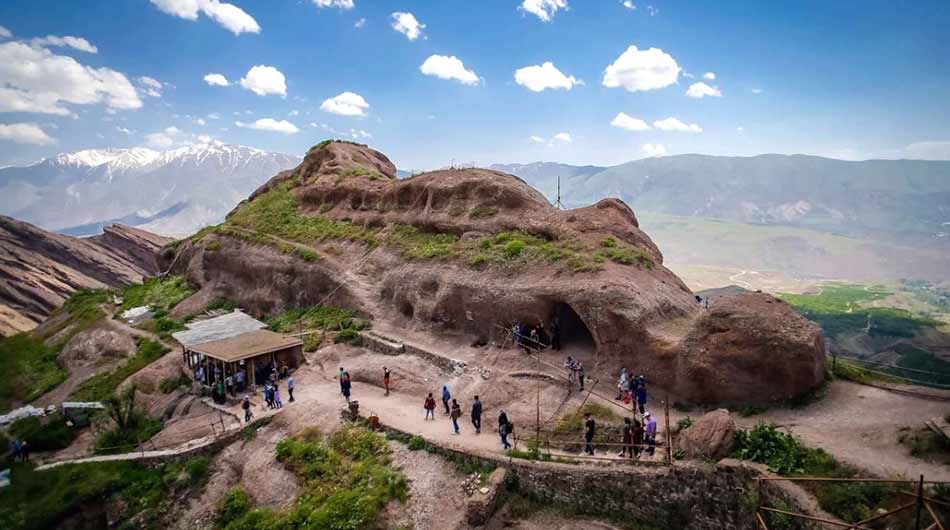
Rather than treating Alamut Castle as a quick day trip, travelers interested in history and archaeology can create a personalized journey combining the central fortress with Lambesar, the Alamut Valley, Ovan Lake, Qazvin, and other cultural and natural destinations in Iran.
Explore Alamut with a Local Perspective
A local travel company can also help travelers understand the historical relationship between the different fortifications and the landscape in which they were built.
IranParadise can assist with tailor-made itineraries, private tours, transportation, accommodation, and local travel arrangements, depending on the traveler’s interests and schedule.
For history enthusiasts, photographers, hikers, and UNESCO travelers, Alamut can be incorporated into a broader Iran journey rather than experienced as an isolated destination.
The result can be a deeper experience of the region — one that goes beyond the famous name of Alamut and explores the wider cultural landscape that UNESCO has now recognized as part of the world’s heritage.
Best Time to Explore the Alamut Fortifications
The best season depends on which sites you plan to visit.
For most travelers, late spring through early autumn offers the most practical conditions for exploring the Alamut Valley.
Spring brings greener landscapes and pleasant temperatures.
Summer generally provides longer days for exploring the mountains.
Autumn can offer spectacular colors and cooler temperatures.
Winter requires considerably more preparation because snow and mountain-road conditions can affect access.
If you plan to visit multiple fortifications rather than only Alamut Castle, allowing extra time and checking local road conditions becomes particularly important.
Tips for Exploring the Alamut Fortifications
Plan beyond Alamut Castle
The UNESCO property consists of seven components. Do not assume that visiting the central castle means you have experienced the entire property.
Allow extra travel time
The sites are distributed across mountainous terrain.
Use local knowledge
A local driver or guide can be particularly useful when exploring less accessible areas.
Wear appropriate footwear
Many of the archaeological sites involve uneven terrain and walking.
Carry water
Mountain excursions can be physically demanding, especially during warmer months.
Respect archaeological remains
Do not climb unstable structures, remove stones, or disturb archaeological features.
Check current conditions
Road access and site conditions can change depending on season and weather.
Alamut’s Seven Fortifications at a Glance
| Component | Historical Role |
|---|---|
| Alamut Castle | Central headquarters and political, military and intellectual center |
| Lambesar Castle | Major associated stronghold |
| Navizarshah Castle | Strategic mountain fortification |
| Shams Kelayeh | Associated defensive fortification |
| Qostinlar | Component of the wider fortified network |
| Shirkouh | Strategic fortification within the Alamut landscape |
| Ilan | Part of the coordinated defensive system |
The seven components together form the UNESCO World Heritage property Alamūt Castle and Related Fortifications.
Frequently Asked Questions About the Seven Fortifications of Alamut
How many castles are included in the Alamut UNESCO World Heritage Site?
The UNESCO property consists of seven castles and fortifications: Alamut Castle, Lambesar, Navizarshah, Shams Kelayeh, Qostinlar, Shirkouh, and Ilan.
Is Alamut Castle the only UNESCO site in the Alamut Valley?
No. Alamut Castle is one component of a serial UNESCO World Heritage property that includes six associated fortifications.
Why are the seven Alamut fortifications considered one UNESCO site?
They are recognized together because they form a historically and structurally connected fortified system associated with the Nizari Ismaili cultural tradition.
Which is the most famous Alamut fortress?
Alamut Castle is by far the most famous because it served as the headquarters of the Nizari Ismaili state and became closely associated with Hassan Sabbah.
Which Alamut castle is associated with Hassan Sabbah?
Alamut Castle is directly associated with Hassan Sabbah. He captured the fortress in 1090 and established it as the headquarters of the Nizari Ismaili state.
Are the seven Alamut castles still intact?
No. The sites are archaeological remains, with surviving walls, foundations, and traces of systems such as water and food infrastructure.
Where are the Alamut fortifications located?
The seven component sites are distributed throughout the Alamut Valley in Qazvin Province, within the Alborz Mountains of northern Iran.
When were the Alamut fortifications added to UNESCO?
Alamūt Castle and Related Fortifications were inscribed on the UNESCO World Heritage List in 2026 under Criterion (iii).
Can tourists visit all seven Alamut fortifications?
The accessibility of the individual sites varies. Alamut Castle is the best-known visitor destination, while some of the associated fortifications are more remote and require additional planning.
Quick Facts
Official UNESCO Name: Alamūt Castle and Related Fortifications
Location: Alamut Valley, Qazvin Province, Iran
Region: Alborz Mountains
UNESCO Inscription: 2026
UNESCO Criterion: (iii)
Property Type: Cultural, serial property
Number of Components: 7
Central Site: Alamut Castle
Associated Fortifications: Lambesar, Navizarshah, Shams Kelayeh, Qostinlar, Shirkouh, Ilan
Historical Association: Nizari Ismailis
Hassan Sabbah’s Capture of Alamut: 1090 CE
Fall of Alamut: 1256 CE
The story of Alamut is often told as the story of one castle.
The UNESCO World Heritage inscription reveals a much bigger picture.
Alamut was a network.
Seven strategically positioned fortifications were connected by geography, history, political organization, and a shared cultural tradition.
At the center stood Alamut Castle, but its strength came from the wider landscape.
Lambesar, Navizarshah, Shams Kelayeh, Qostinlar, Shirkouh, and Ilan complete the story — showing how the Nizari Ismailis transformed the rugged Alborz Mountains into a landscape of defense, settlement, agriculture, scholarship, and cultural life.
Today, these archaeological remains offer travelers an opportunity to see a lesser-known side of Iran’s history.
And after their inscription as a UNESCO World Heritage Site in 2026, the seven fortifications of Alamut are no longer simply scattered ruins in the mountains.
Together, they form one of Iran’s newest internationally recognized cultural heritage landscapes.
Tags:Alamut archaeological sites, Alamut Castle history, Alamut Castle Iran, Alamut Castle UNESCO, Alamut castles, Alamut defensive system, Alamut fortifications, Alamut fortified network, Alamut historical sites, Alamut tourism, Alamut travel guide, Alamut UNESCO World Heritage Site, Alamut Valley castles, Alamut Valley fortresses, Alamut Valley history, Alamut Valley travel, ancient fortresses in Iran, castles of Alamut Valley, Hassan Sabbah Alamut, historic castles in Iran, Ilan Fortification, Iran UNESCO sites, iranparadise, Ismaili fortresses in Iran, Lambesar Castle, medieval castles in Iran, Navizarshah Castle, Nizari Ismaili fortresses, Nizari Ismaili history, northern Iran historical sites, Qazvin historical sites, Qostinlar Fortification, seven castles of Alamut, Seven Fortifications of Alamut, Shams Kelaye h Fortification, Shirkouh Fortification, UNESCO World Heritage Iran, درنا گشت
Post Discussion