

Alamut Castle Travel Guide: How to Get There, Best Time to Visit & Things to See
Alamut Castle Travel Guide: How to Get There, Best Time to Visit & Things to See
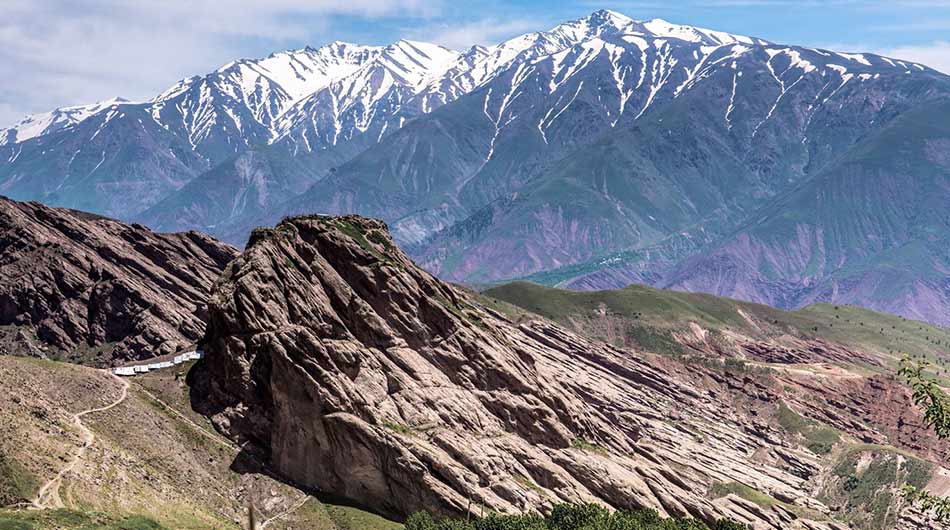
Rising dramatically above the rugged landscape of Iran’s Alborz Mountains, Alamut Castle is one of the country’s most fascinating historical destinations.
Once the stronghold and center of the Nizari Ismailis, the fortress is now an archaeological site surrounded by spectacular mountain scenery, remote villages, deep valleys, and a landscape that tells a remarkable story of medieval Iran.
Following the inscription of Alamūt Castle and Related Fortifications on the UNESCO World Heritage List in 2026, interest in visiting the region is likely to grow.
But visiting Alamut is not quite like visiting a conventional tourist attraction.
The castle lies in a mountainous and relatively remote landscape, and reaching it is part of the experience. Travelers need to plan their route, choose the right season, allow enough time, and be prepared for a steep walk to the archaeological remains.
This Alamut Castle travel guide explains everything you need to know before visiting, from how to get there from Qazvin to the best time to visit and the places worth adding to your itinerary.
Where Is Alamut Castle?
Alamut Castle is located in the Alamut Valley of Qazvin Province in northern Iran, within the Alborz mountain range.
The fortress stands on a dramatic rocky elevation near the village of Gazor Khan, overlooking the surrounding valley. Its elevated position was one of the reasons the location was so valuable as a medieval fortress.
The Alamut region itself is much larger than the castle. Historically, the surrounding valleys contained numerous fortifications that formed part of a wider network.
Today, this landscape is part of the UNESCO-recognized property Alamūt Castle and Related Fortifications, which includes seven component sites.
How Far Is Alamut Castle from Qazvin?
Qazvin is generally considered the main gateway to the Alamut region.
The road journey from Qazvin to Alamut Castle is roughly 90–100 kilometers, depending on the route and destination point.
Although the distance may not seem particularly long, the mountainous terrain means that the journey takes considerably longer than a similar distance on a highway.
Travelers should think of the journey as a mountain excursion rather than a simple city-to-city transfer.
The road winds through mountain landscapes and valleys before reaching the Alamut region. Historical sources also emphasize how isolated the valley was for centuries because of its difficult geography. Modern roads have made access considerably easier, but the mountainous character of the region remains.
How to Get to Alamut Castle
From Qazvin to Alamut
For most independent travelers, the easiest approach is to begin in Qazvin and travel north toward the Alamut region.
A private car, rental car, or car with a local driver is generally the most practical option.
Public transportation within the Alamut region is limited, and schedules can be difficult for international travelers to navigate. For this reason, arranging transportation in advance is usually more convenient than relying entirely on buses or taxis.
The route takes you deeper into the Alamut landscape before reaching the area around Gazor Khan, the village associated with the castle.
Can You Visit Alamut Castle Without a Car?
It is possible to reach the wider Alamut region using public transportation and local transportation, but visiting the castle independently can be more complicated.
The valley has historically been relatively isolated, and some villages and archaeological sites remain difficult to access without private transportation.
For international visitors, a private driver or organized local tour can therefore be a much easier option.
It also gives travelers more flexibility to stop at viewpoints, villages, and other historical sites along the way.
The Road to Alamut Is Part of the Journey
One of the best things about traveling to Alamut is that the destination is only part of the experience.
As the road moves away from the plains around Qazvin and into the Alborz Mountains, the landscape changes dramatically.
Mountain ridges rise around narrow valleys, villages appear among agricultural land, and the road follows the contours of the mountainous terrain.
The isolation that once helped protect Alamut from invading armies is still visible in the geography.
Centuries ago, this landscape provided a natural defensive system.
Today, it provides one of the most scenic mountain journeys in northern Iran.
What Is the Best Time to Visit Alamut Castle?
The best time to visit Alamut Castle is generally during the warmer months when mountain roads and hiking conditions are more favorable.
Spring
Spring is one of the most attractive seasons for visiting Alamut.
The landscape becomes greener, temperatures are generally more comfortable, and the mountain scenery can be particularly beautiful.
For travelers who want a combination of pleasant weather, natural scenery, and historical exploration, spring is an excellent choice.
Summer
Summer is also a popular season for exploring the Alamut Valley.
Temperatures in the mountains can be considerably more comfortable than in Iran’s hotter lowland cities, making it suitable for outdoor exploration.
However, summer weekends and holidays can be busier, particularly around popular natural attractions.
Autumn
Autumn can be one of the most visually impressive times to visit.
The mountain landscape takes on warmer colors, while cooler temperatures make hiking and sightseeing pleasant.
For photographers, autumn can offer exceptional conditions for landscape photography.
Winter
Winter requires considerably more planning.
The Alamut region is mountainous and can experience snow and difficult road conditions. Historically, the region’s high passes have been affected by winter weather, and modern travelers should check road conditions before departure.
For a first visit, late spring through early autumn is generally the safer choice for combining road travel, sightseeing, and hiking.
How Difficult Is the Hike to Alamut Castle?
Visiting the archaeological remains of Alamut requires walking uphill from the access area.
This is an important consideration for travelers who expect to arrive directly at the castle entrance by car.
The final approach involves a steep ascent, and the terrain is uneven in places.
You do not need to be an experienced mountaineer, but comfortable walking shoes and a reasonable level of fitness are strongly recommended.
The effort is rewarded by the landscape.
From the elevated ruins, visitors can look across the surrounding mountains and valleys and understand why this location was chosen as a fortress.
The geography itself becomes part of the historical story.
What Should You Wear for a Visit to Alamut?
Because Alamut is a mountain archaeological site, practical clothing is more important than fashionable clothing.
Consider bringing:
- Comfortable walking shoes
- Lightweight layered clothing
- Sun protection
- A hat and sunglasses
- Water
- Snacks
- A light jacket, particularly outside summer
- A rain layer during changeable weather
Even during warmer months, mountain weather can change more quickly than conditions in Qazvin.
What Can You See at Alamut Castle?
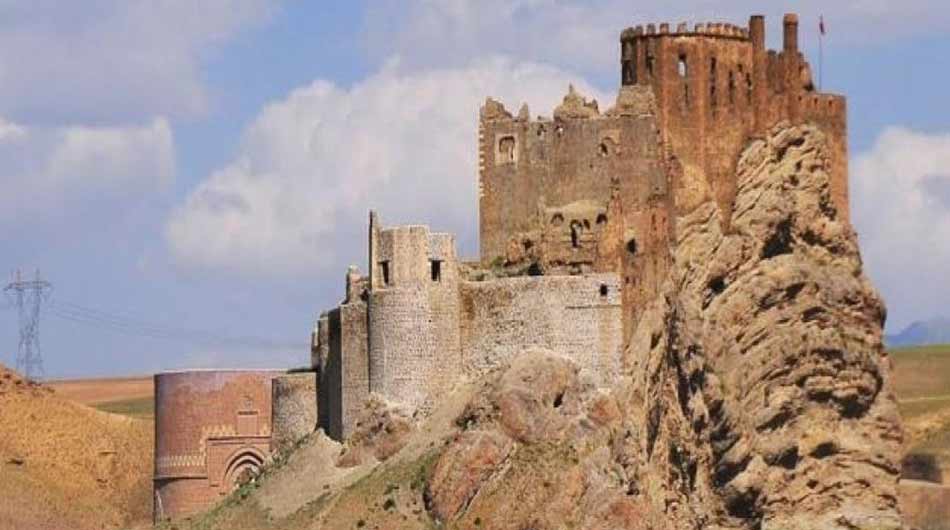
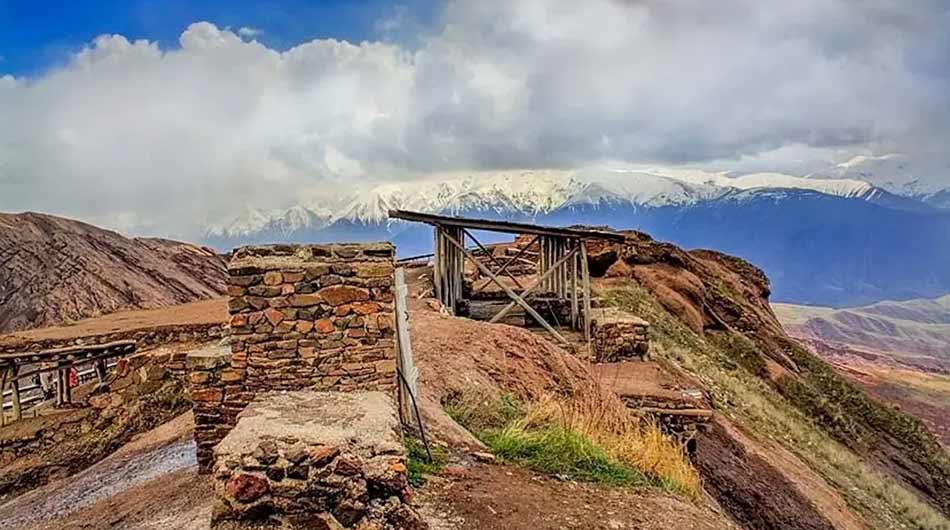
The Alamut Castle visible today is primarily an archaeological ruin rather than a fully preserved medieval fortress.
The remains nevertheless provide important clues about how the stronghold was organized.
UNESCO’s evaluation describes defensive structures, walls, towers, pathways, water systems, and other archaeological remains that demonstrate how the fortress functioned within the wider Alamut network.
The Fortress Ruins
The surviving remains allow visitors to imagine the scale and strategic character of the original stronghold.
Rather than focusing only on individual walls, take time to understand the relationship between the fortress and the surrounding landscape.
The Mountain Views
The panoramic views are one of the highlights of the visit.
From the elevated position of the castle, the surrounding Alamut Valley unfolds below the ruins.
This is one of those rare historical sites where the landscape helps explain the history.
Ancient Water Systems
Water was essential to the survival of a mountain fortress.
Historical research has documented sophisticated systems involving cisterns, qanats, and channels within the wider network of Alamut fortifications. These systems helped fortresses withstand prolonged periods of isolation and siege.
Defensive Architecture
The natural geography of Alamut was itself a defensive advantage.
Steep cliffs, narrow approaches, and elevated rocky positions made direct attacks extremely difficult.
The architecture of the fortress was therefore designed in close relationship with its natural environment.
Things to See Near Alamut Castle
A trip to Alamut should ideally not be limited to the castle itself.
The wider valley contains several places that can turn a short visit into a full-day or multi-day journey.
Lambesar Castle
Lambesar Castle is one of the most important fortifications associated with the Alamut network.
It was strategically positioned within the mountainous landscape and became one of the major strongholds of the Nizari Ismailis.
Lambesar is also one of the seven component sites included in the UNESCO World Heritage property.
Ovan Lake
Ovan Lake is one of the best-known natural attractions in the Alamut region.
Surrounded by mountains, the lake provides a striking contrast to the area’s historical fortresses.
Combining Alamut Castle with Ovan Lake can create a particularly rewarding itinerary for travelers interested in both history and nature.
Alamut Valley
Do not rush through the valley simply to reach the castle.
The villages, mountain roads, agricultural landscapes, and dramatic geological formations are an important part of the Alamut experience.
The valley itself helps explain why the region was both difficult to access and strategically valuable.
How Long Should You Spend in Alamut?
For travelers visiting only Alamut Castle, a long day trip from Qazvin may be possible.
However, if you want to explore the wider region, two days or more can provide a much better experience.
A longer itinerary allows time for:
- Alamut Castle
- Lambesar Castle
- Ovan Lake
- Mountain viewpoints
- Villages in the Alamut Valley
- Local landscapes and hiking routes
The region rewards slow travel.
Rather than treating Alamut as a quick stop between destinations, consider giving yourself enough time to experience the landscape.
Can You Visit Alamut Castle in One Day from Tehran?
It may be possible to make a very long day trip from Tehran, but it is not the option we would recommend for travelers who want to enjoy the region.
The distance from Tehran, combined with the winding mountain roads and the time required to explore the castle, can make a same-day itinerary tiring.
A better approach is to travel first to Qazvin, explore the city, and then continue into Alamut.
This also allows travelers to combine two historically important destinations in the same trip.
Planning Your Alamut Trip with IranParadise
Visiting Alamut Castle can be a rewarding experience, but planning a journey through the Alamut Valley requires more than simply finding the castle on a map. The mountainous roads, remote attractions, changing weather conditions, and distance between historical sites make local knowledge especially valuable.
IranParadise, an Iran-based travel company with extensive experience in organizing cultural and tailor-made journeys, can help international travelers include Alamut in a personalized Iran itinerary. The company works with travelers to create customized trips based on their interests, schedule, and preferred travel style.
For travelers interested in Alamut, a private itinerary can combine the castle with other destinations in northern Iran, such as Qazvin, Ovan Lake, and other historical and natural attractions in the Alamut Valley.
Why Choose a Local Travel Company for Alamut?
Traveling with a local company can make exploring a mountainous destination like Alamut considerably easier.
IranParadise provides personalized travel planning, private tours, transportation arrangements, accommodation options, and professional tour leaders. Its travel services can be adapted around interests such as history, culture, trekking, photography, and adventure.
For visitors who want to explore Alamut at a comfortable pace, a tailor-made itinerary can also provide greater flexibility than a fixed group tour. Travelers can decide how much time to spend at the archaeological sites, add hiking or nature experiences, and combine Alamut with other destinations across Iran.
Creating a Tailor-Made Alamut Itinerary
A customized Alamut journey can be designed as part of a broader Iran trip or as a dedicated excursion from Qazvin.
Depending on your interests and available time, an itinerary may include:
- Alamut Castle and its archaeological remains
- Lambesar Castle, another important fortress within the Alamut network
- Ovan Lake and the surrounding mountain scenery
- Historic Qazvin
- Local villages and landscapes in the Alamut Valley
- Hiking and photography experiences
- Other UNESCO World Heritage Sites and cultural destinations in Iran
IranParadise also offers private and tailor-made travel experiences across Iran, allowing travelers to combine major cultural landmarks with less-visited destinations such as Alamut.
Travel with Local Knowledge
One of the advantages of working with an experienced Iran travel company is having local support throughout the journey.
For a destination such as Alamut, this can be particularly useful when arranging transportation through mountainous areas, selecting suitable accommodation, planning the timing of visits, and connecting Alamut with other destinations.
Rather than treating Alamut as a quick stop on a fixed itinerary, travelers can build the journey around their own interests and explore the region at a more relaxed pace.
IranParadise can help travelers turn a visit to Alamut from a simple sightseeing excursion into a deeper cultural and historical experience of Iran.
A Suggested Alamut Itinerary
Day 1: Qazvin
Begin your journey in Qazvin.
Explore the city’s historic sites and museums before preparing for the journey into the Alamut Valley.
Qazvin is particularly relevant to the Alamut story because of its historical relationship with the region during the medieval period.
Day 2: Qazvin to Alamut
Leave Qazvin in the morning and travel toward Alamut.
Enjoy the mountain scenery along the way and allow enough time for stops.
Continue toward Gazor Khan and visit Alamut Castle.
After exploring the archaeological site, spend time taking in the surrounding mountain landscape.
Day 3: Explore the Alamut Valley
If time allows, dedicate another day to the wider region.
Visit Ovan Lake, explore other landscapes, and consider adding Lambesar Castle or another historical site to your route.
This slower itinerary provides a much deeper understanding of Alamut than a quick visit to the castle alone.
Is Alamut Castle Suitable for Families?
Families can visit Alamut, but the final climb and uneven archaeological terrain should be considered.
Young children, older travelers, or anyone with limited mobility may find the ascent challenging.
Because the site is an archaeological ruin in a mountainous environment, visitors should also supervise children carefully around steep terrain.
Is Alamut Castle Suitable for Photographers?
Absolutely.
Alamut is an exceptional destination for landscape and travel photography.
The combination of:
- dramatic mountain formations
- ancient stone ruins
- expansive valley views
- changing seasonal colors
- remote villages
- atmospheric weather
creates opportunities that go far beyond conventional architectural photography.
For the best results, early morning and late afternoon light can create stronger textures across the mountains and ruins.
Why Visit Alamut After Its UNESCO Inscription?
The 2026 UNESCO inscription gives travelers another reason to discover the region.
But the real attraction is not simply the UNESCO label.
Alamut offers something increasingly rare: the opportunity to experience a major historical landscape where archaeology, geography, and history remain closely connected.
The UNESCO property recognizes not just one isolated castle but a wider network of seven fortifications associated with the Nizari Ismaili cultural tradition.
Visiting the region therefore provides a chance to understand how people once used the mountains themselves as part of a defensive, political, agricultural, and cultural system.
Practical Tips Before Visiting Alamut Castle
Before starting your journey, keep these points in mind:
Check road conditions.
Mountain weather can affect travel, particularly in winter.
Start early.
An early departure gives you more time for sightseeing and reduces the pressure of returning after dark.
Carry water.
The final walk to the castle can be physically demanding.
Wear proper shoes.
The archaeological terrain is uneven.
Do not rely entirely on mobile connectivity.
Remote mountain areas may have limited coverage.
Consider hiring a local driver or guide.
This can make navigating the region considerably easier.
Respect the archaeological site.
Do not climb unstable structures, remove stones, or disturb archaeological remains.
Allow extra time.
The Alamut Valley is worth exploring beyond the castle itself.
Alamut Castle Travel Guide: Quick Facts
Location: Alamut Valley, Qazvin Province, Iran
Nearest major city: Qazvin
Region: Alborz Mountains
Nearby village: Gazor Khan
UNESCO status: World Heritage Site
UNESCO inscription: 2026
UNESCO property: Alamūt Castle and Related Fortifications
Number of component sites: 7
Recommended travel season: Late spring to early autumn
Terrain: Mountainous and partly steep
Main experience: History, archaeology, mountain landscapes, and cultural heritage
Frequently Asked Questions About Visiting Alamut Castle
How do I get to Alamut Castle from Qazvin?
The most practical option is to travel by private car, rental car, or car with a driver from Qazvin into the Alamut Valley. The road journey is roughly 90–100 km depending on the route, but the mountainous terrain makes the trip longer than the distance suggests.
What is the best time to visit Alamut Castle?
Late spring, summer, and early autumn are generally the most convenient seasons for visiting. Winter can bring snow and difficult mountain-road conditions, so winter travelers should check local conditions before setting out.
Is there a hike to Alamut Castle?
Yes. Visitors need to walk uphill to reach the archaeological remains. The ascent can be steep, so comfortable walking shoes and water are recommended.
Can I visit Alamut Castle without a tour?
Yes, independent travel is possible, particularly if you have private transportation. However, because the Alamut Valley is mountainous and some attractions are remote, a local driver or guide can make the journey much easier.
How many days do I need for Alamut?
A long day can be enough for Alamut Castle itself, but two or three days are preferable if you want to explore the wider valley, Ovan Lake, Lambesar Castle, and other attractions.
Is Alamut Castle still standing?
Only parts of the original fortress survive. The site is primarily an archaeological ruin, but the remaining structures, defensive features, water systems, and landscape provide important evidence of its historical role.
Is Alamut Castle the same as Hassan Sabbah’s castle?
Yes. Alamut Castle is historically associated with Hassan Sabbah, who established it as the center of the Nizari Ismaili movement in Iran in the late 11th century.
Is Alamut Castle worth visiting?
Definitely. Alamut is especially rewarding for travelers interested in Iranian history, medieval fortresses, archaeology, hiking, photography, and dramatic mountain landscapes.
A journey to Alamut Castle is more than a visit to an ancient fortress.
It is a journey into the landscape that shaped one of the most fascinating chapters of medieval Iranian history.
The winding roads, isolated villages, steep mountains, archaeological remains, and extraordinary views all contribute to the experience.
And following its inscription as a UNESCO World Heritage Site in 2026, Alamut is entering a new chapter — one in which travelers from around the world can discover the real landscape behind one of Iran’s most enduring legends.
If you are planning a journey through Iran beyond the country’s most famous destinations, Alamut Valley deserves a place on your itinerary.
Tags:Alamut Castle hiking, Alamut Castle how to get there, Alamut Castle Iran, Alamut Castle itinerary, Alamut Castle location, Alamut Castle tour, Alamut Castle travel, Alamut Castle travel guide, Alamut Castle trip, Alamut Iran tourism, Alamut Valley attractions, Alamut Valley Iran, Alamut Valley travel guide, Alamut Valley travel guide Iran, best time to visit Alamut Castle, how to visit Alamut Castle, Iran historical sites, Iran UNESCO World Heritage Sites, iranparadise, Lambesar Castle, medieval castles in Iran, northern Iran travel, Ovan Lake Alamut, Qazvin to Alamut Castle, Qazvin travel guide, things to do in Alamut Valley, visiting Alamut Castle, درنا گشت
Post Discussion